APN | Zoom
30 September 2025
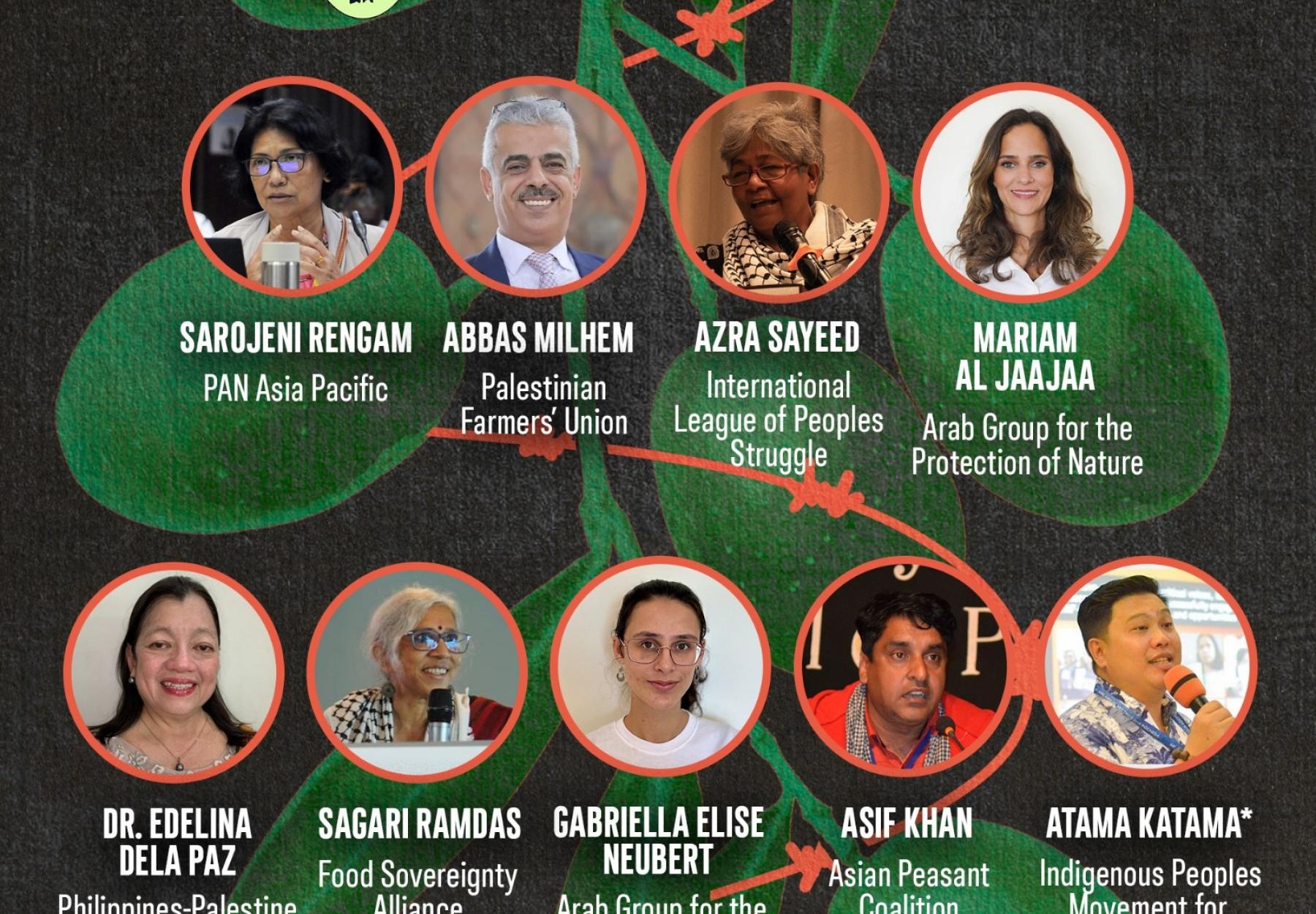
In her closing remarks at the webinar “From Famine to Freedom: The Struggle for Food and Land in Palestine”, organized by the Pesticide Action Network Asia and the Pacific (PANAP) in coordination with the Palestinian Farmers’ Union (PFU), APN General Manager Mariam Al Jaajaa emphasized that the occupation is waging an ecocide targeting life in Gaza and Palestine. She noted that the remaining 2,320 dunums of agricultural land represent a frontline that must be revived, seed by seed and dunum by dunum.
Al Jaajaa put forward a series of urgent recommendations, including: an immediate and permanent ceasefire; breaking the siege and ensuring access to seeds and agricultural inputs; strengthening food sovereignty and protecting local capacities; rejecting “peace” and recovery plans that marginalize Palestinian sovereignty; boycotting the occupation and halting all forms of normalization; holding all perpetrators accountable under international law; and supporting the International People’s Tribunal on the Right to Resist, scheduled in Barcelona. She stressed that the Palestinians’ connection to their land is unbreakable and that they will continue their struggle until return.
APN Advocacy and Research Assistant Gabriella Neubert presented on the concept of Green Resistance and the “Revive Gaza’s Farmland” project, which counters the systematic war of starvation and reinforces the foundations of food sovereignty. She explained that APN has successfully cultivated 1,256 dunums and produced over 6.2 million kilograms of vegetables, directly supporting 705 farmers who provide for more than 12,000 individuals. Neubert also highlighted the initiative “From the Besieged Farmer to Besieged Families”, which delivers agricultural products directly to families to help offset price gouging.
Neubert emphasized that the occupation kills not only through the siege and aid restrictions but also through militarized distribution of aid and targeting those seeking assistance. She called for the urgent import of seeds and cultivation of the remaining arable land in Gaza, underscoring that restoring local food systems and rehabilitating agricultural infrastructure are essential pillars for resisting genocide, starvation, and settler-colonialism.