APN | Nairobi
6 December 2025
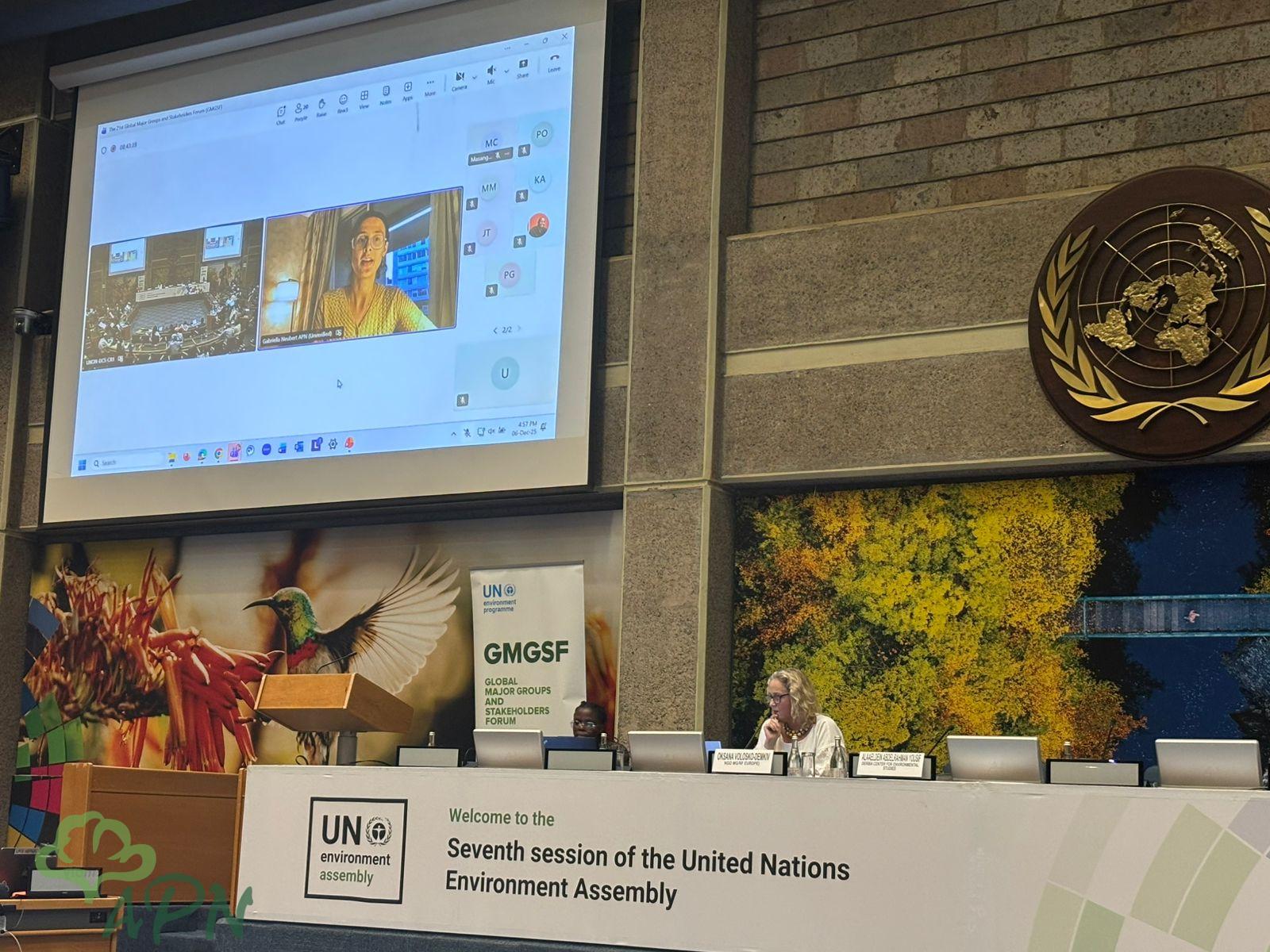
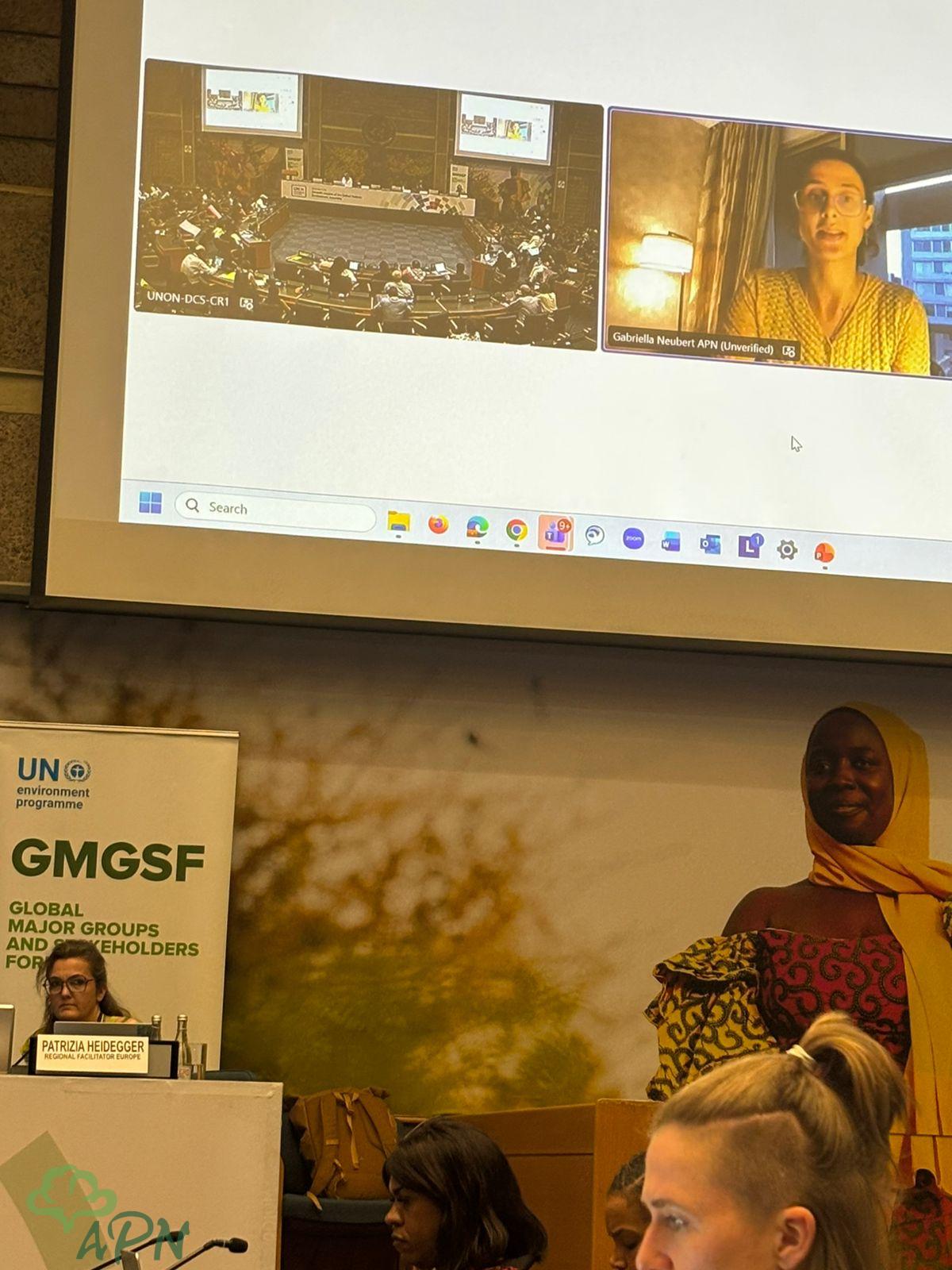
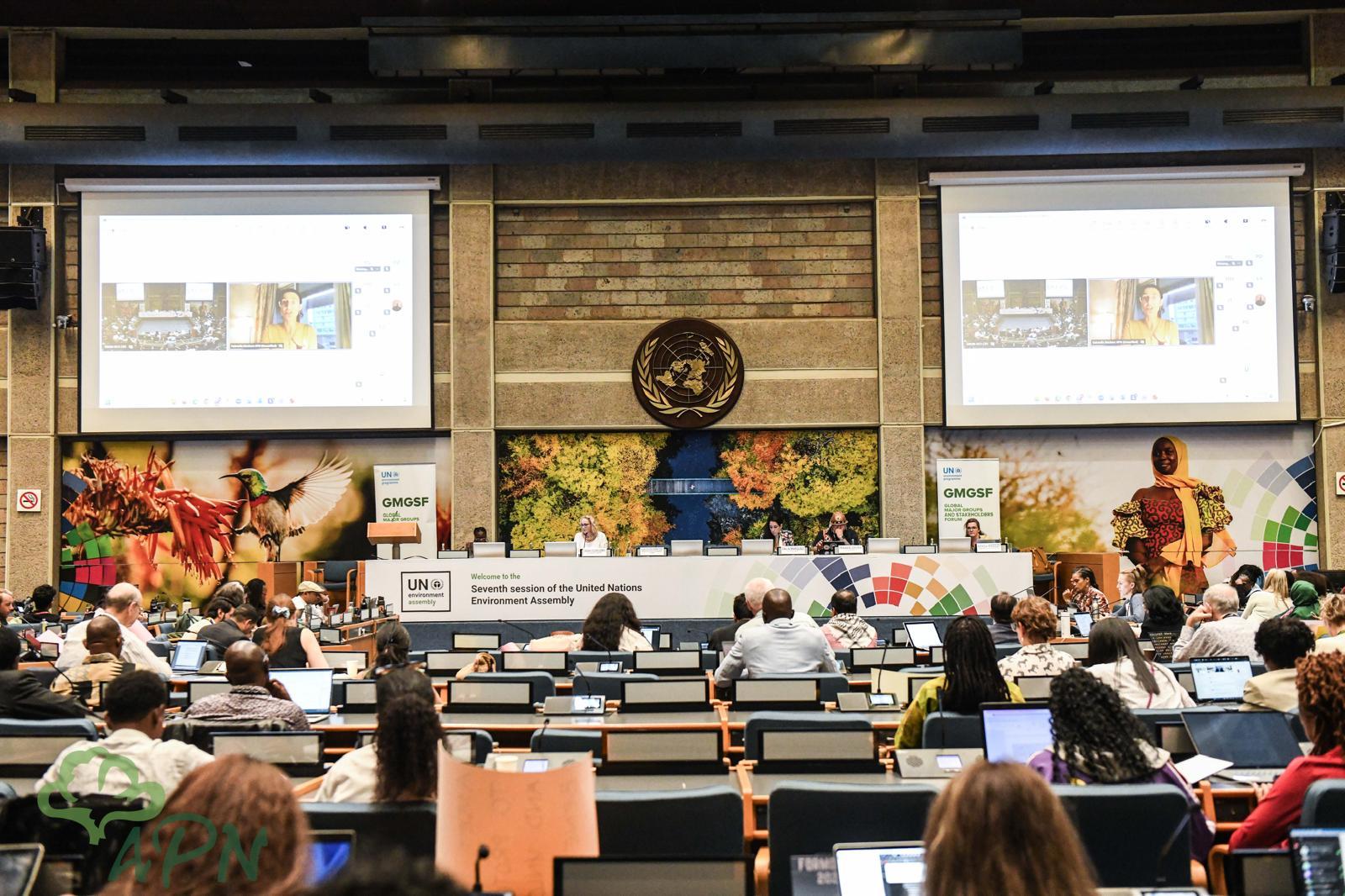
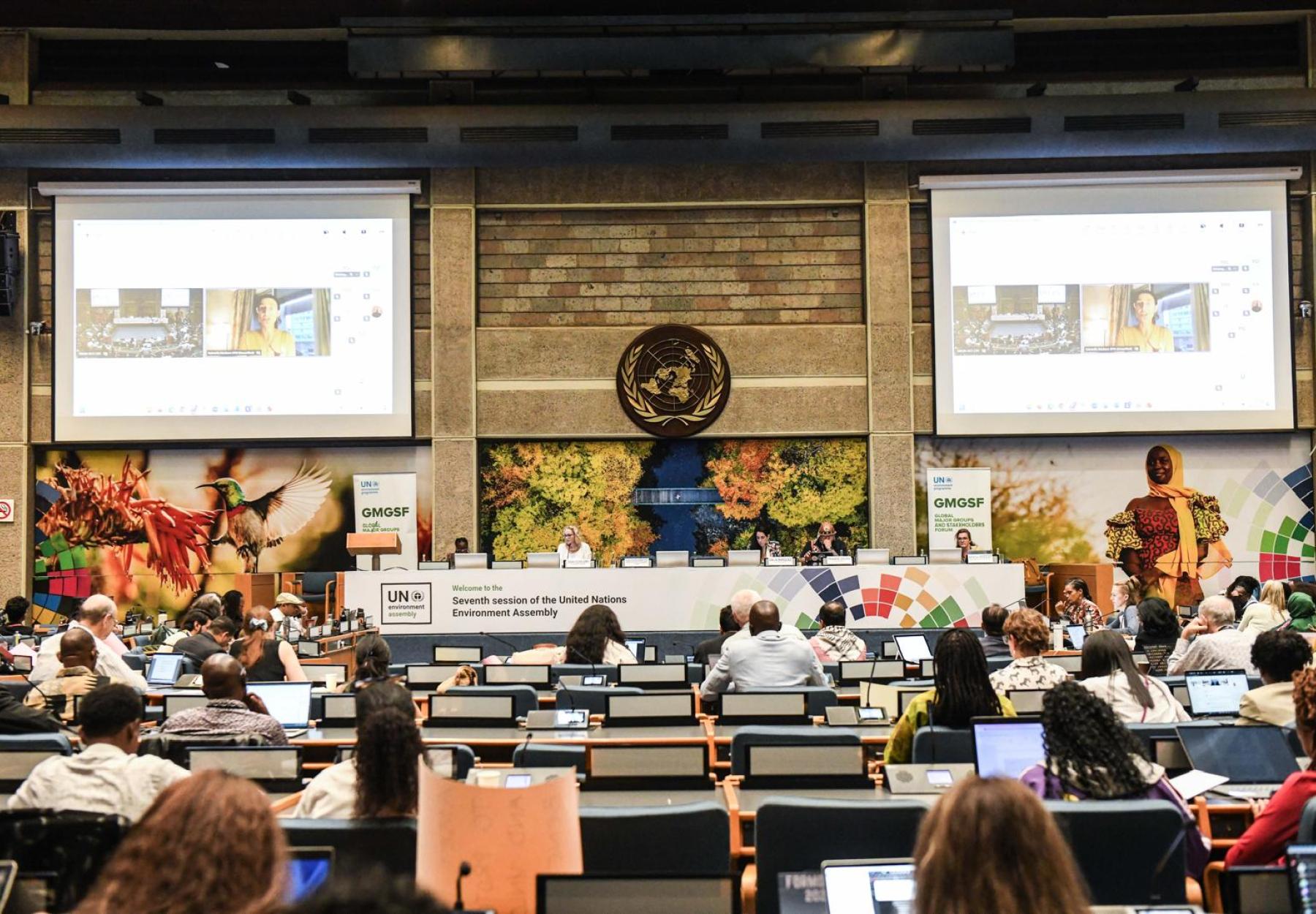
During APN’s intervention on the agenda item "Solidarity with environmentalists making a difference during armed conflict and occupation" at the 21st Global Major Groups and Stakeholders Forum (GMGSF) ahead of the 7th Session of the United Nations Environment Assembly (UNEA-7), Advocacy and Research Assistant Gabriella Neubert spoke to how environmental questions in the Arab region cannot be separated from the violence of colonial occupation. Addressing the theme of “a resilient planet”, she warned that “resilience” is often misused to shift responsibility onto communities forced to adapt to systems designed to erase or displace them. For APN, genuine resilience requires preventing the re-emergence of these shocks by addressing the root causes of occupation and the international structures that maintain it.
Neubert traced the weaponisation of the environment in Palestine as a continuous project of erasure and replacement which prepared the grounds for genocide and ecocide in Gaza. An estimated 680,000 Palestinians have been martyred through direct and indirect mechanisms of genocide, including the destruction of life-sustaining ecologies, with 87% of cropland and 97% of trees and shrubland damaged or destroyed.
She criticised the military-industrial complex which evades accountability and governments resuming arms exports, warning that “post-ceasefire” and "peace" discourse is being used to absolve perpetrators while Israeli occupation continues to kill and displace with impunity. Similar dynamics are unfolding in the West Bank where mass tree uprootings and full village besiegements replicate starvation tactics in Gaza. In Lebanon, entire villages and agricultural belts are being razed by the occupation. “How can we ponder questions of adaptability in such contexts?”, she asked, while affirming APNs solidarity with all communities contending these structures of erasure.
Highlighting APN’s work across Palestine and its Revive Gaza’s Farmland Project, which has cultivated 1,341 dunums and produced over seven million kilograms of produce, Neubert affirmed that sovereign revival of Gaza’s agroecologies is both possible and essential. With 6,000 dunums ready for cultivation, this could yield tens of millions of kilograms of vegetables resistant to the siege.
She urged UNEA to ground environmental recovery in international humanitarian and environmental law so as to ensure it is not leveraged by predatory states and corporations to bury the question of justice and self-determination for Palestine, as envisioned by Palestinians.