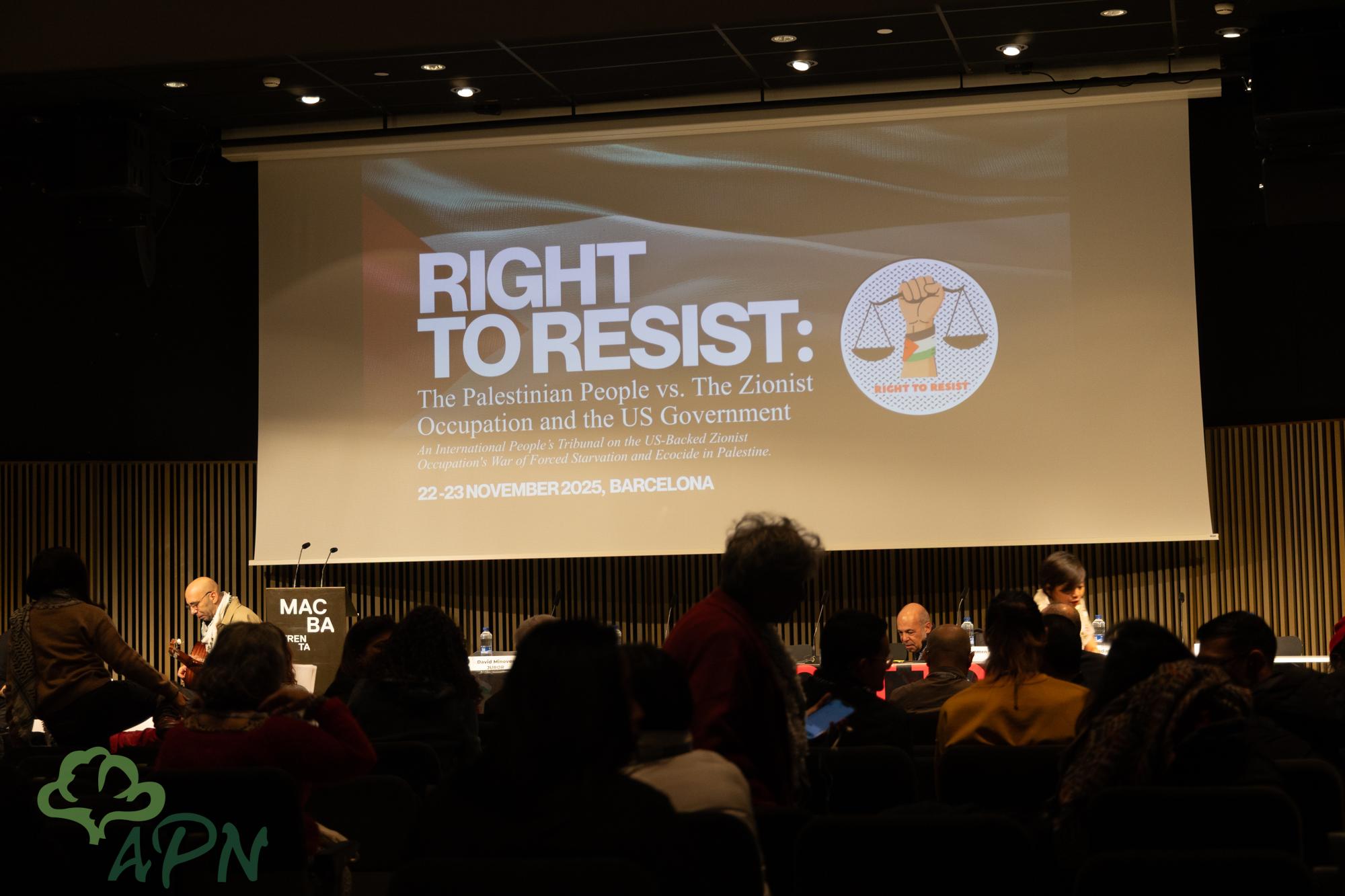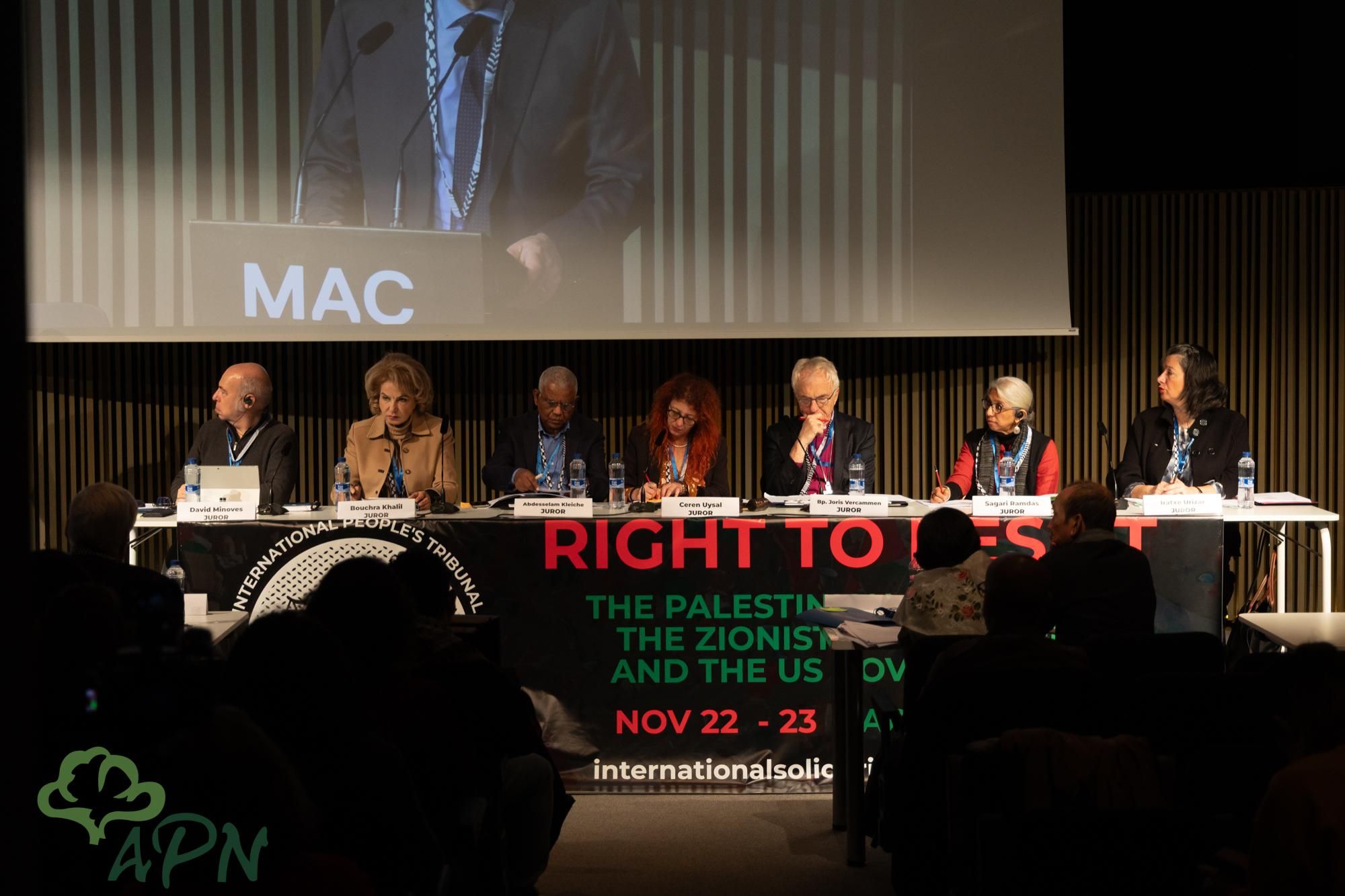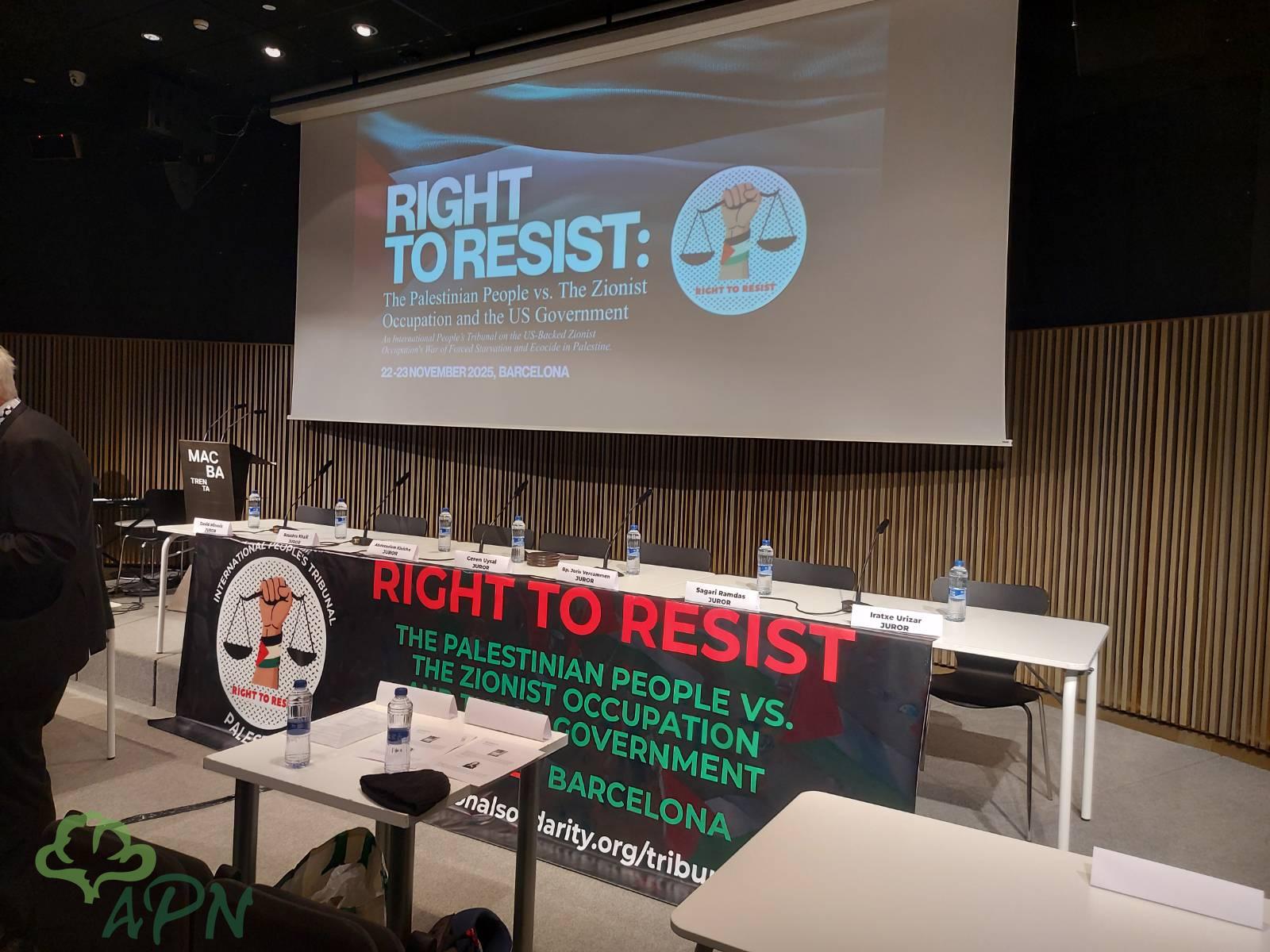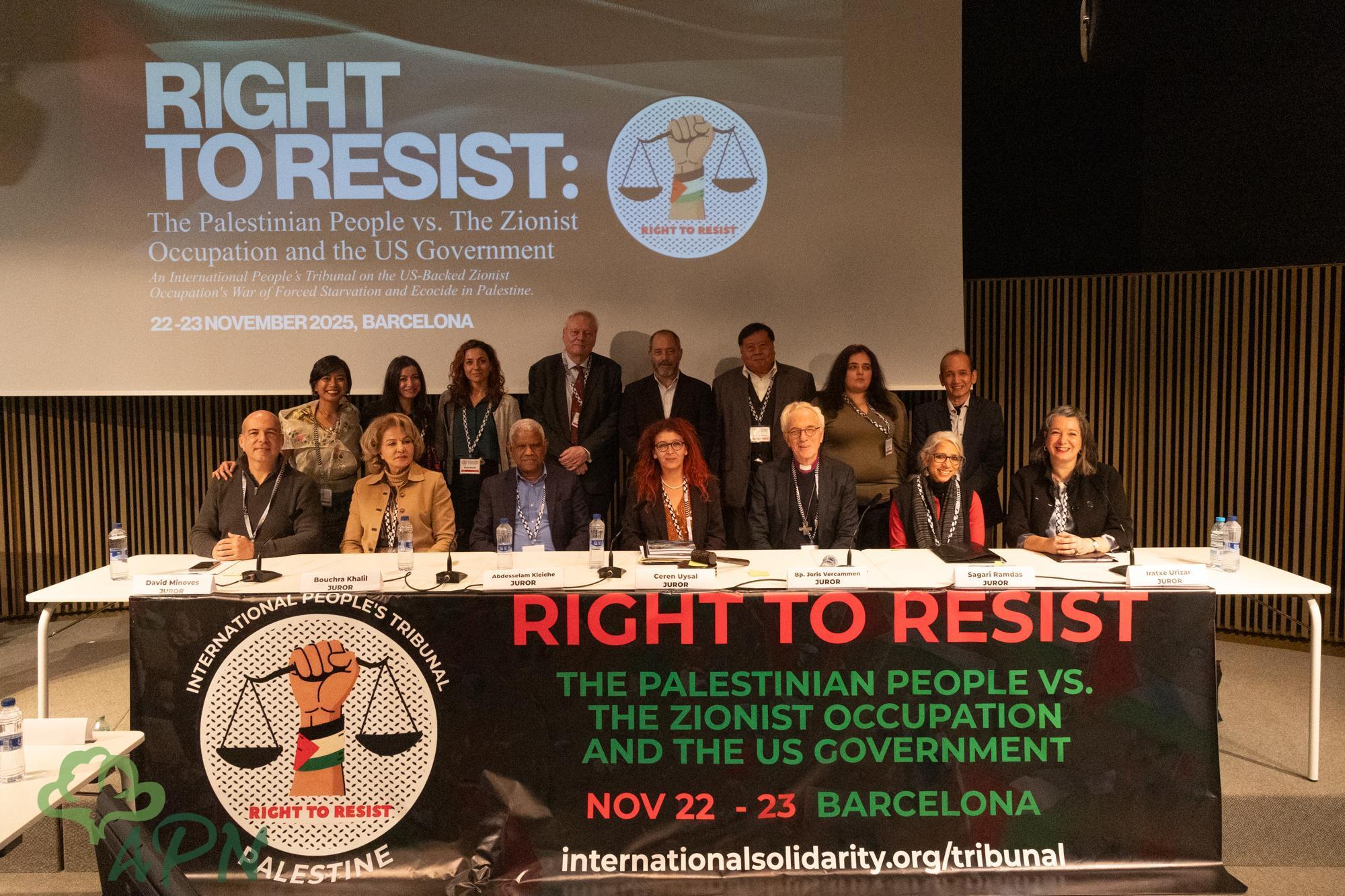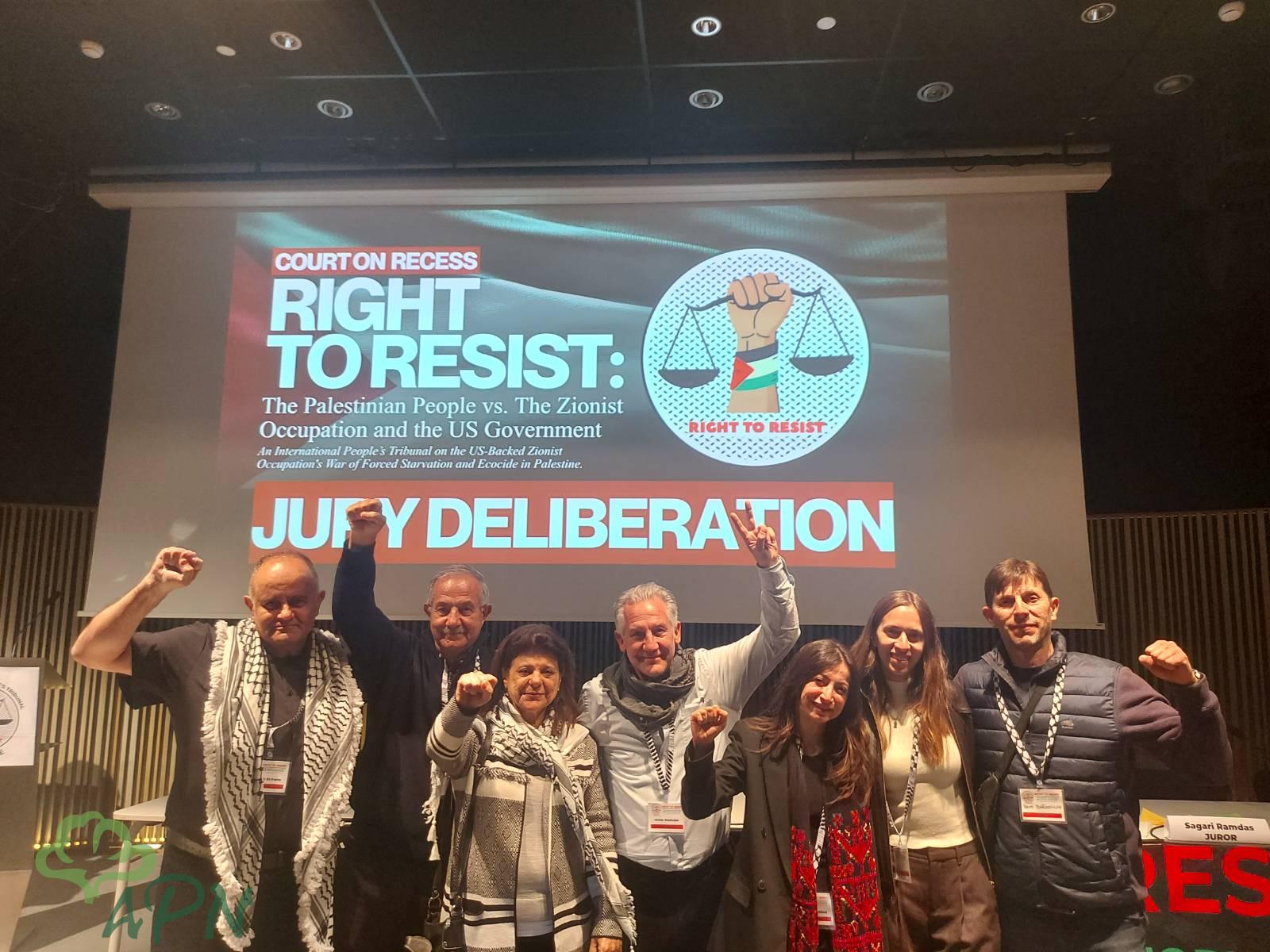
After a year of preparation, the International People’s Tribunal on Forced Starvation and Ecocide in Palestine was held in Barcelona, Catalonia (Spain), on 22–23 November 2025. The tribunal was launched as an independent initiative by the Arab Group for the Protection of Nature (APN), the International League of Peoples’ Struggles, the International Association of Democratic Lawyers, and the People’s Coalition on Food Sovereignty, with the support of the International People’s Front (IPF).
The tribunal aims to document and assess environmental violations, the weaponisation of food, and related humanitarian violations linked to the Israeli occuaption’s ongoing genocide in Palestine, drawing on testimonies from eyewitnesses and experts in international law, environmental science, and the humanitarian sector. It functions as an independent people’s mechanism for collecting, reviewing, and analyzing evidence in line with international legal standards on environmental protection and the right to food during armed conflict.
Preparatory Seminars and Deepening the Legal and Rights-Based Framework
In the lead-up to the tribunal, APN participated in a series of preparatory seminars that explored the legal, human rights, and environmental implications of Israeli and imperial-backed crimes in Palestine. The seminars aimed to broaden international understanding of the political realities that necessitate the tribunal at this critical juncture.
During these seminars, lawyer Farah Emad gave a specialised presentation on the concept of ecocide from a legal perspective, reviewing relevant international laws, including international humanitarian law. She addressed the legal mechanisms through which this type of crime can be proven, despite the lack of formal recognition of ecocide to date. She also referenced historical precedents in Vietnam and Indonesia, while highlighting the continuation of similar patterns of environmental destruction in Palestine today.
In another seminar, APN Research and Advocacy Associate Gabriella Neubert discussed the role of global youth in supporting the Palestinian cause, the diversity and legitimacy of forms of resistance, highlighting APN’s experience in what is known as “green resistance” as a model linking environmental struggle with national liberation.
In a comprehensive assessment of the situation on the ground, Lisa Shahin, Research and Advocacy Coordinator, affirmed that killings did not stop following what was termed a “ceasefire”, and that humanitarian aid conditions did not improve. Instead, patterns of genocide were restructured through new means, alongside escalating attacks in the West Bank—making the timing of the tribunal critically important.
In the closing seminar, APN Chairperson Razan Zuayter stressed that what the Palestinian people are facing is not a temporary “conflict”, but rather an integrated system of settler colonialism, genocide, ecocide, and forced starvation—whose characterization has been denied for decades through colonial narratives aimed at delegitimising resistance and downplaying the depth of Palestinian history and its rootedness in the land.
For more details, click here.
Opening Session: The Overall Framework of the Charges
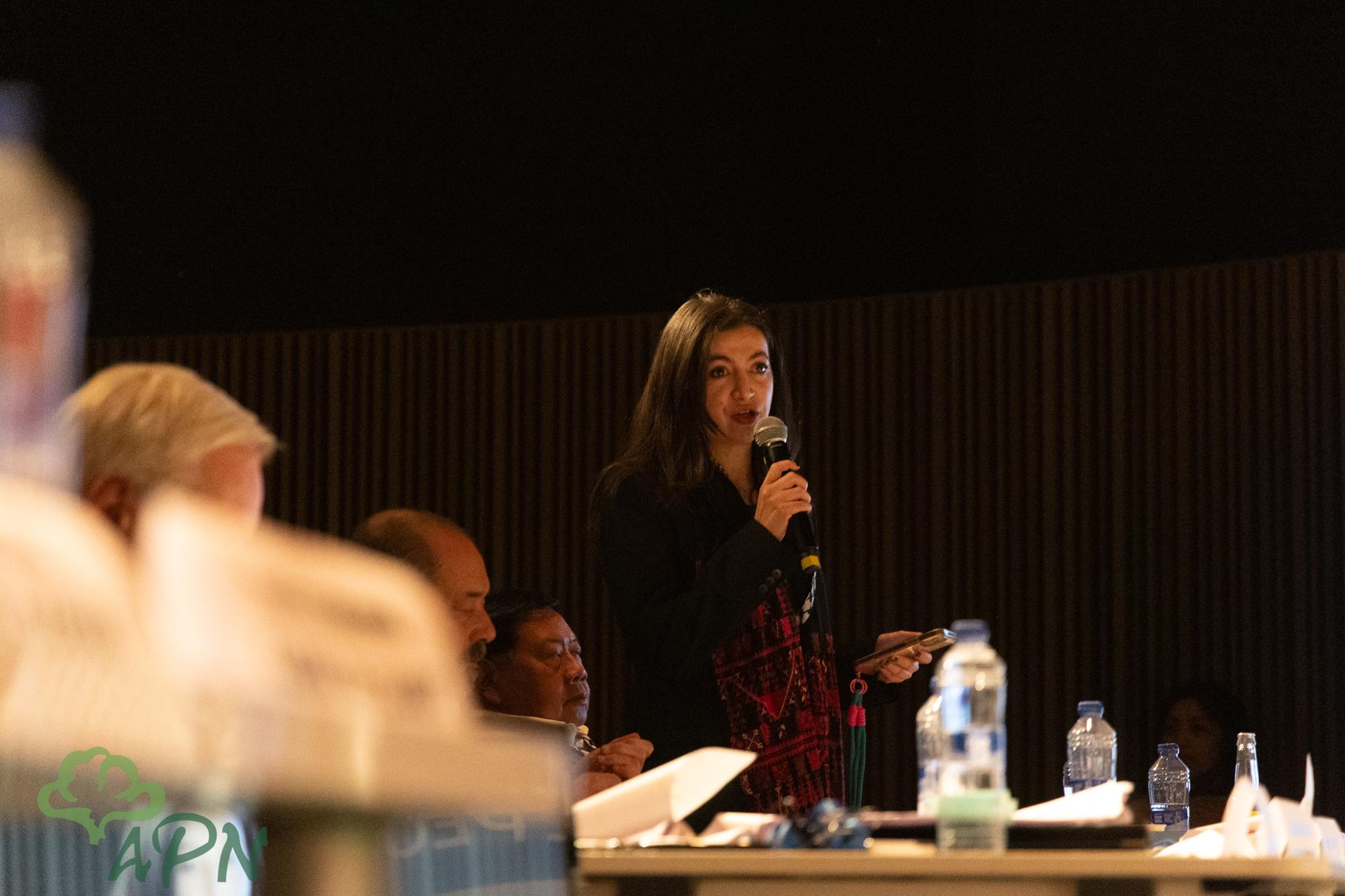
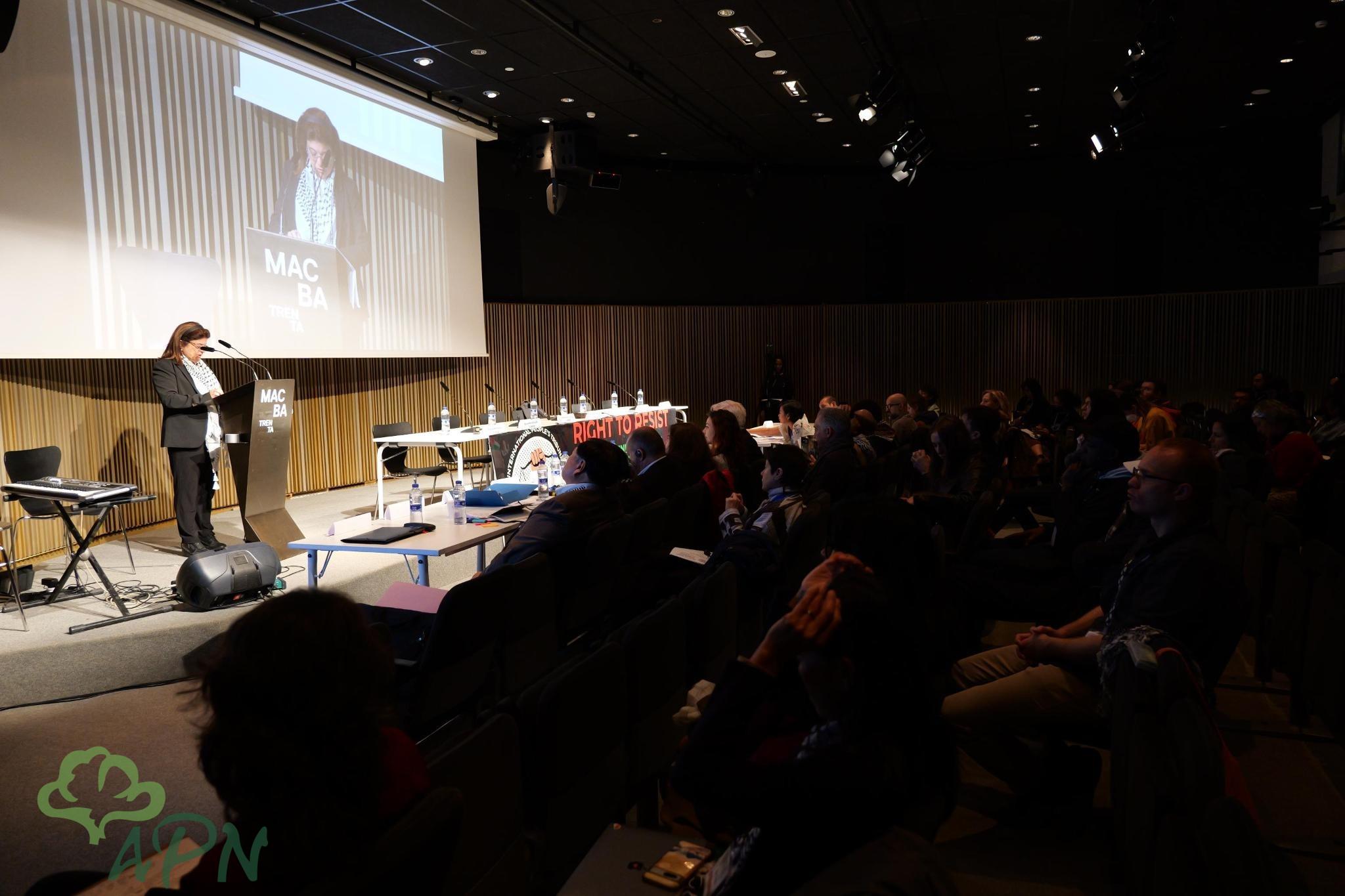
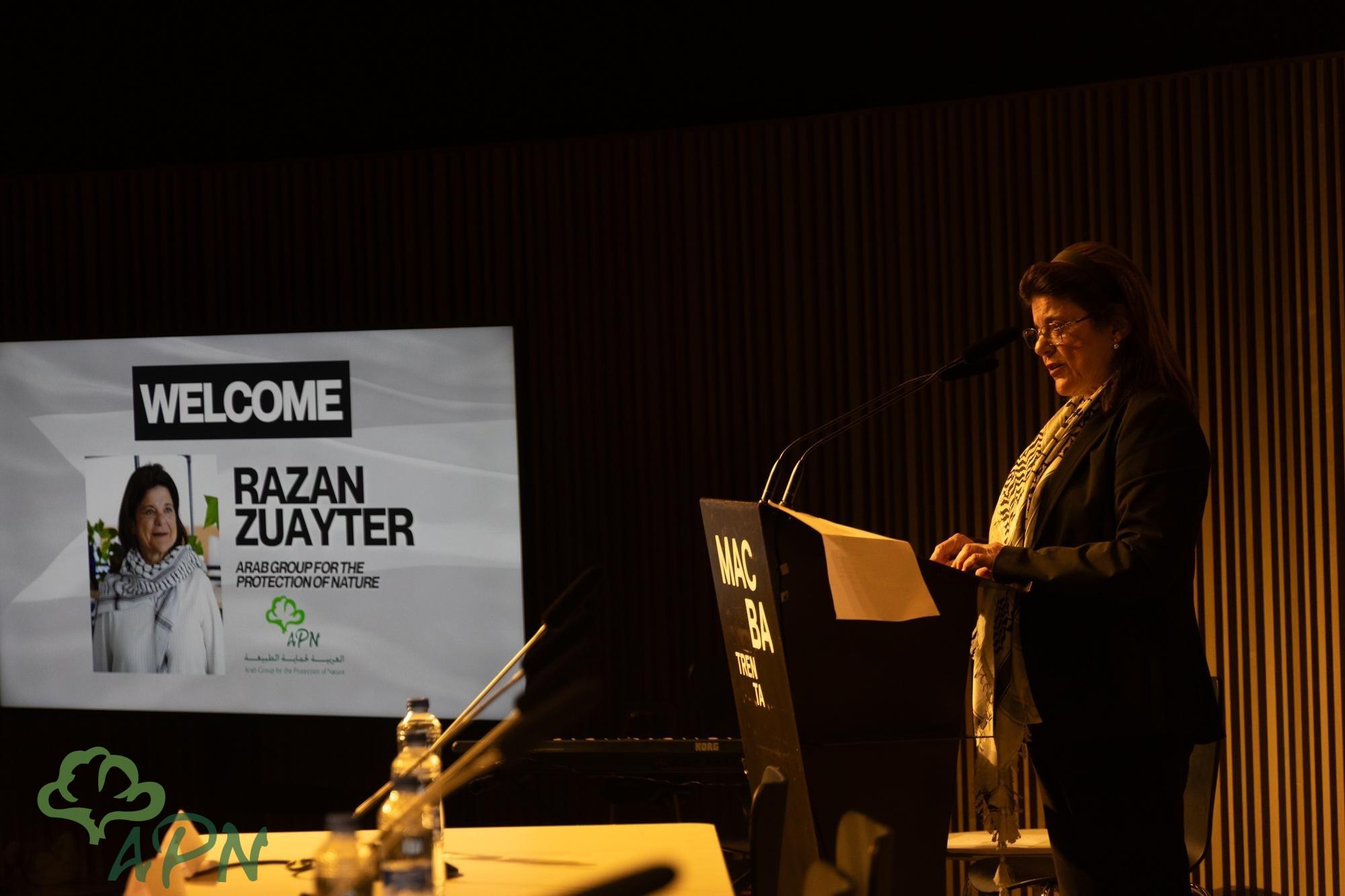
In the opening session of the tribunal, APN Chairperson Razan Zuayter delivered a speech outlining the tribunal’s objectives and methodology. She emphasised that what is happening in Palestine is not a series of isolated violations, but an integrated system of systematic colonial violence, in which food and the environment are used as weapons to subjugate the Palestinian people and crush the possibility of their survival.
Zuayter underscored that the deliberate destruction of soil and water, the blocking of seeds, the razing of fields, and the transformation of nature itself into a tool of siege collectively constitute the features of ecocide and forced starvation aimed at killing in both the present and the future. She described the people’s tribunal as an act of intellectual and documentary resistance in the face of the failure of the international system.
To listen to the opening speech, click here.
Proceedings of the Sessions: Testimonies and Evidence
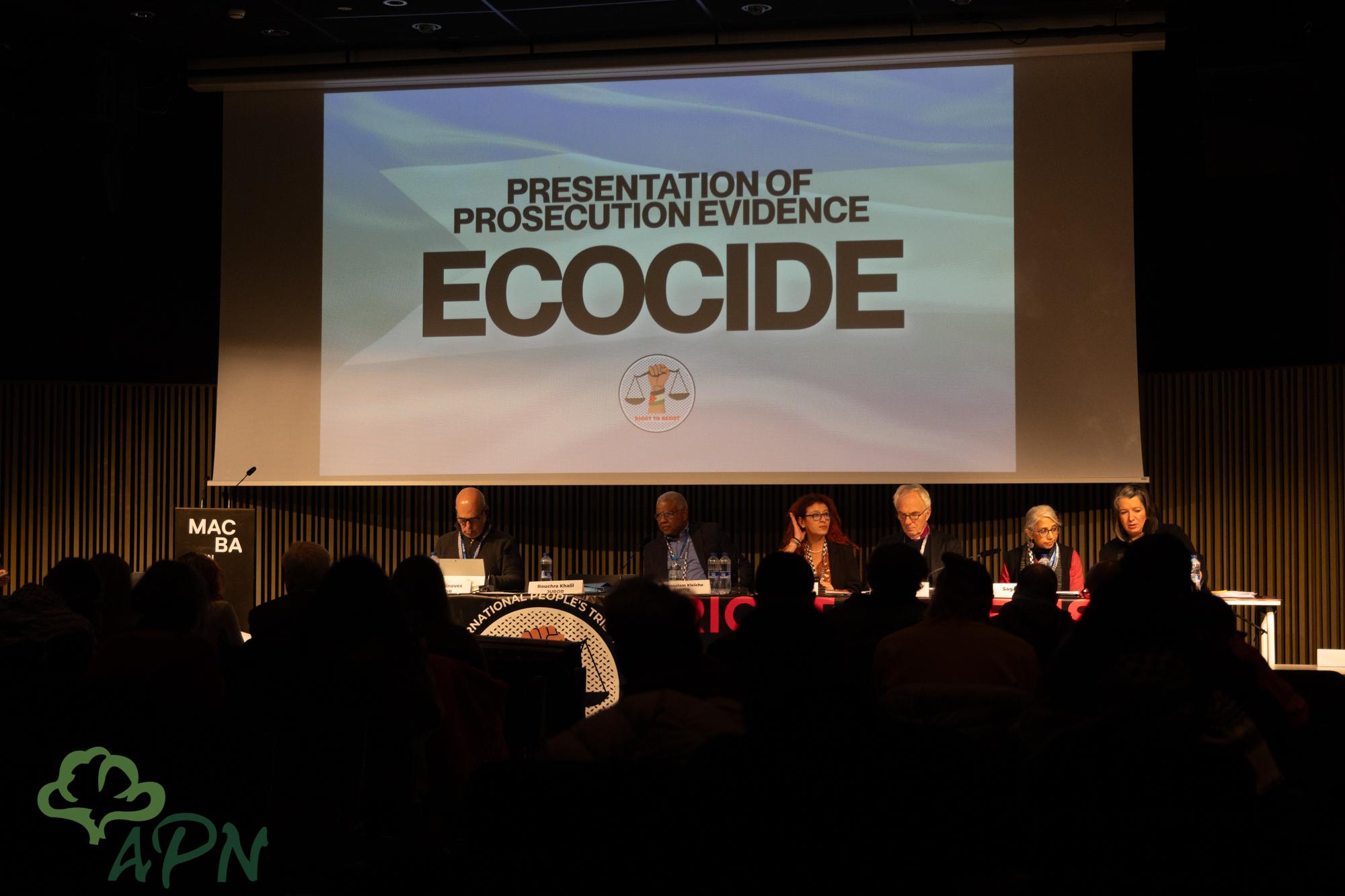
On the first day of hearings, the tribunal reviewed testimonies from 11 experts and witnesses from human rights organisations, international law experts, and Palestinian officials. These testimonies documented the destruction of Gaza’s natural environment, including agricultural lands, groundwater, and vital infrastructure, as well as the imposition of a comprehensive siege preventing access to food, water, and medicine.
On the second day, the tribunal heard five additional testimonies focusing on the deepening of crimes—particularly the targeting of women and healthcare centres, and the deprivation of medical services in order to undermine the demographic capacity of Palestinians. Environmental and health experts presented evidence described as conclusive of systematic ecocide aimed at killing natural life and preventing the reconstruction of Palestinian society.
Starvation and Collective Punishment
The prosecution presented testimonies from Gaza describing collective punishment, including the demolition of entire homes, the killing of entire families, attacks on fishermen and farmers, and the obstruction of humanitarian aid. Witnesses also reported the destruction of 95% of Gaza’s port during the early days of the conflict. These actions were shown to constitute an intentional strategy of inflicting a widespread famine through the deprivation of food and water, crop destruction, and dismantling of agricultural infrastructure.
Dr. Diana Nazzal provided a medical assessment of severe malnutrition caused by forced starvation, highlighting its impact on children and women. She also noted instances where humanitarian aid sites were weaponised to commit genocide, constituting a clear violation of international humanitarian law.
Expert Analysis: Beyond Genocide to “Metacide”
Legal and environmental experts agreed that the crimes committed went beyond genocide and ecocide. Prosecutor Jan Vermon described them as “Metacide”, meaning the systematic destruction of humans, the environment, and social, economic, and cultural structures, depriving the Palestinian people of the ability to survive and rebuild.
Verdict and Reactions
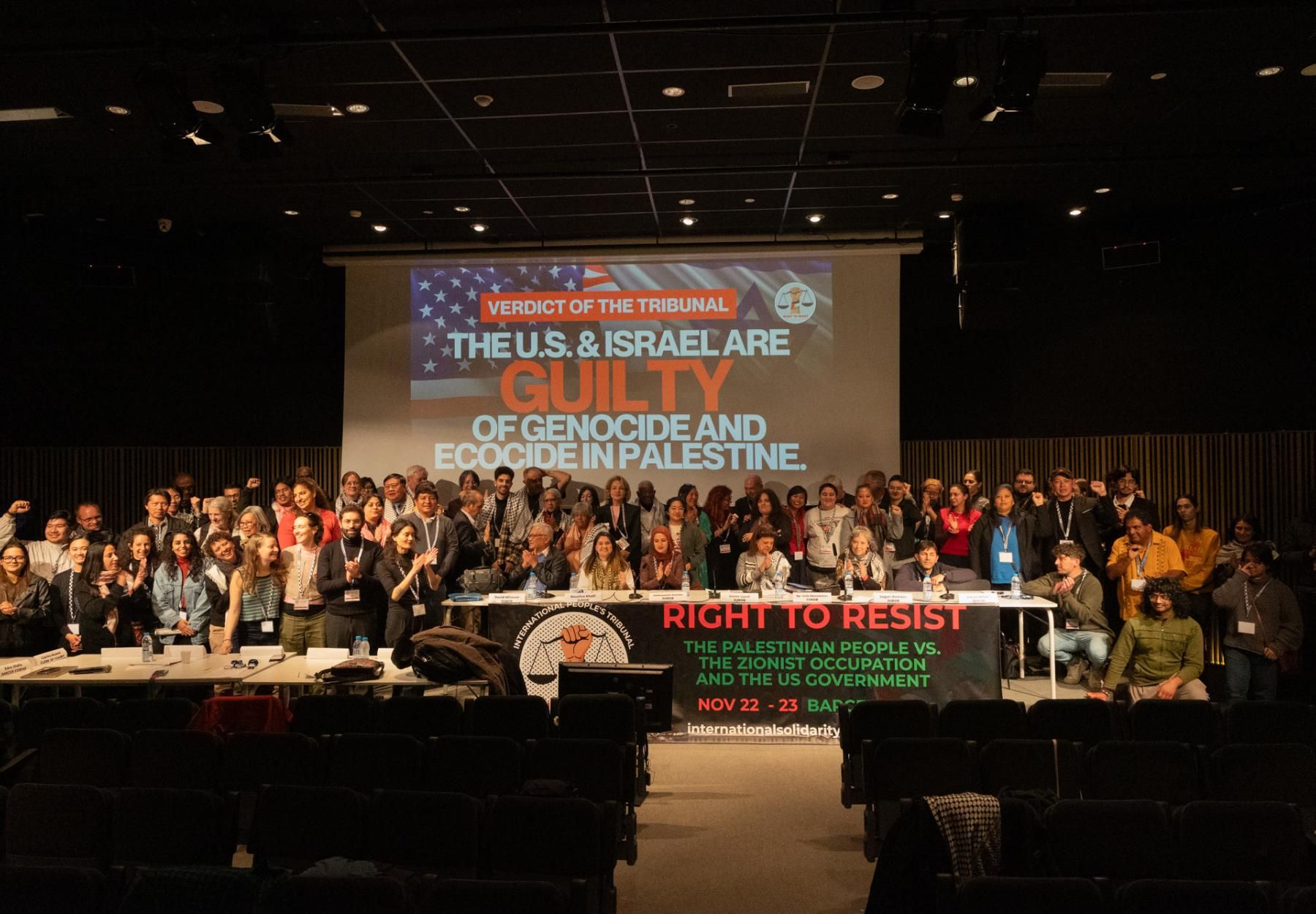
At the conclusion of the sessions, the International People’s Tribunal for Palestine issued its final verdict, identifying Israel as the primary perpetrator of genocide, ecocide, and forced starvation against the Palestinian people in Gaza. It also condemned the United States, the United Kingdom, Germany, France, the Netherlands, Hungary, and other parties for complicity and participation in enabling these crimes through political, military, and logistical support.
The jury affirmed that the evidence presented exceeds the standards required to establish criminal intent and premeditation under international law.
To view the official English statement issued by the tribunal, click here.
Reactions and Next Steps
Following the announcement of the verdict, chants of “Freedom, freedom for Palestine” echoed through the hall. Organisers announced that the ruling will be used as a tool for popular and political pressure to advance accountability and combat impunity.
A delegation from the tribunal and activists proceeded to the Israeli consulate in Barcelona to deliver a copy of the verdict, but the consulate refused to receive it. Organisers stated that this step marks the beginning of building an international popular front in support of the Palestinian people’s right to self-determination and the cessation of all forms of support for the occupation.
The tribunal also announced a series of events and campaigns in the coming months to continue documenting crimes, strengthen international solidarity, and transform the tribunal’s findings into practical tools for legal, media, and popular accountability.