APN | Beirut
5 December 2025
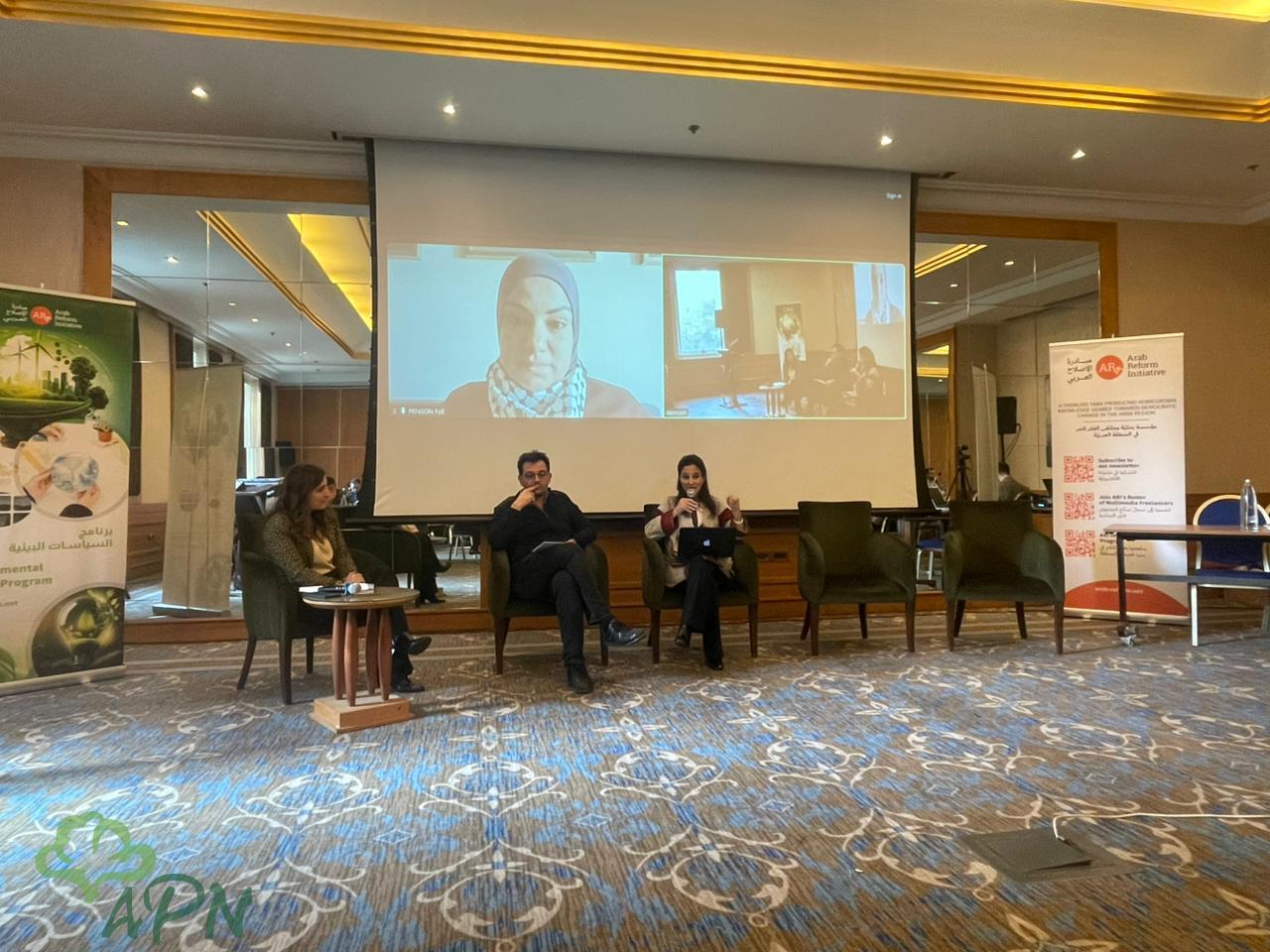
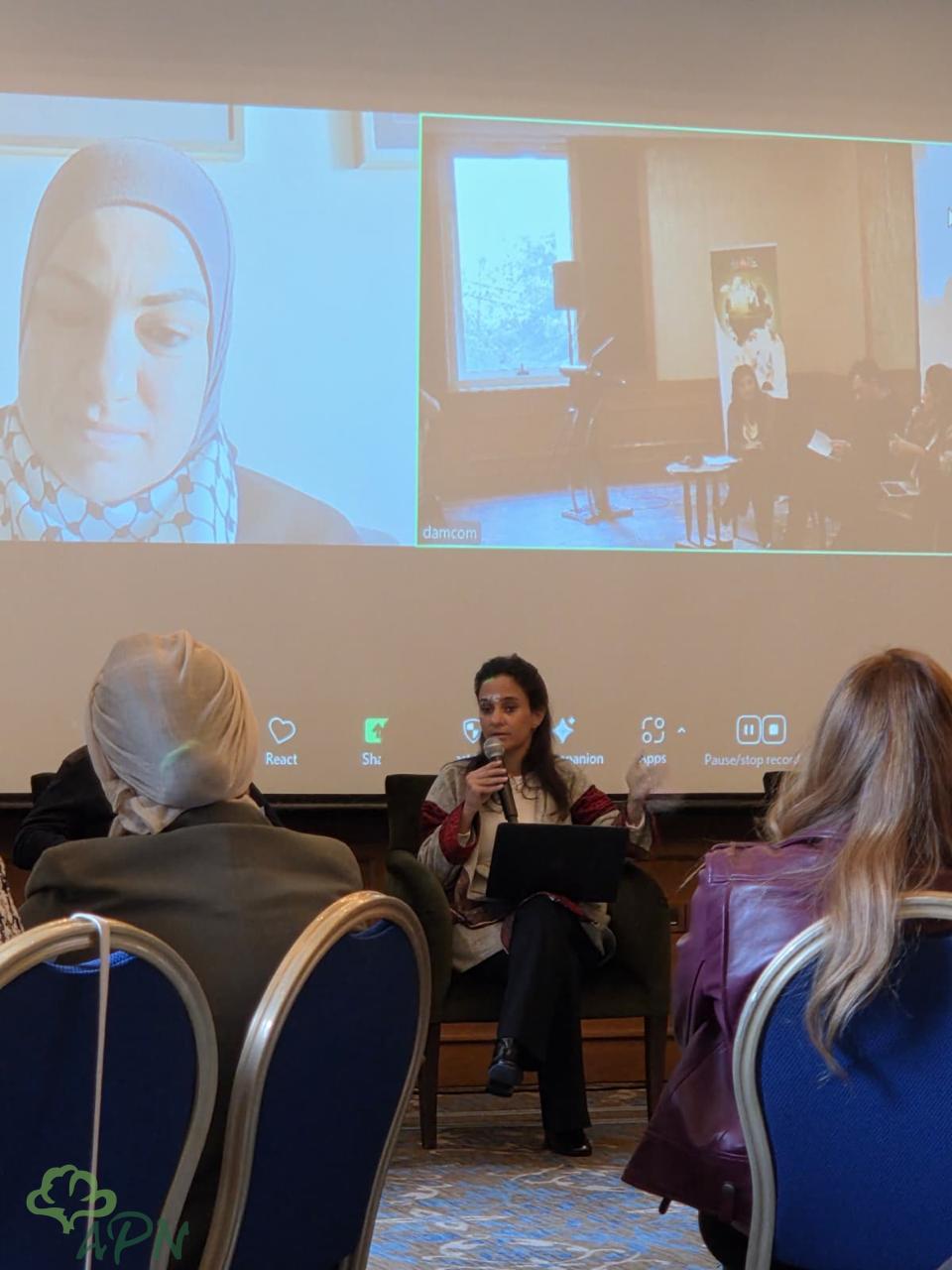
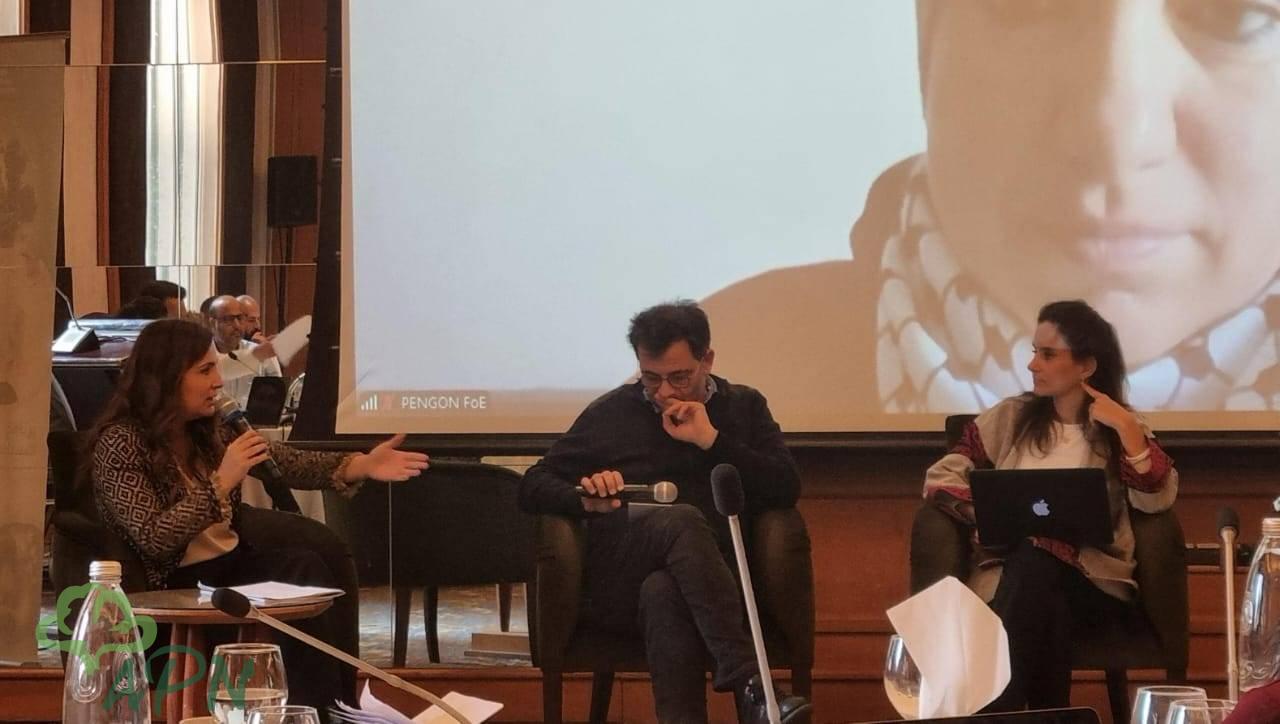
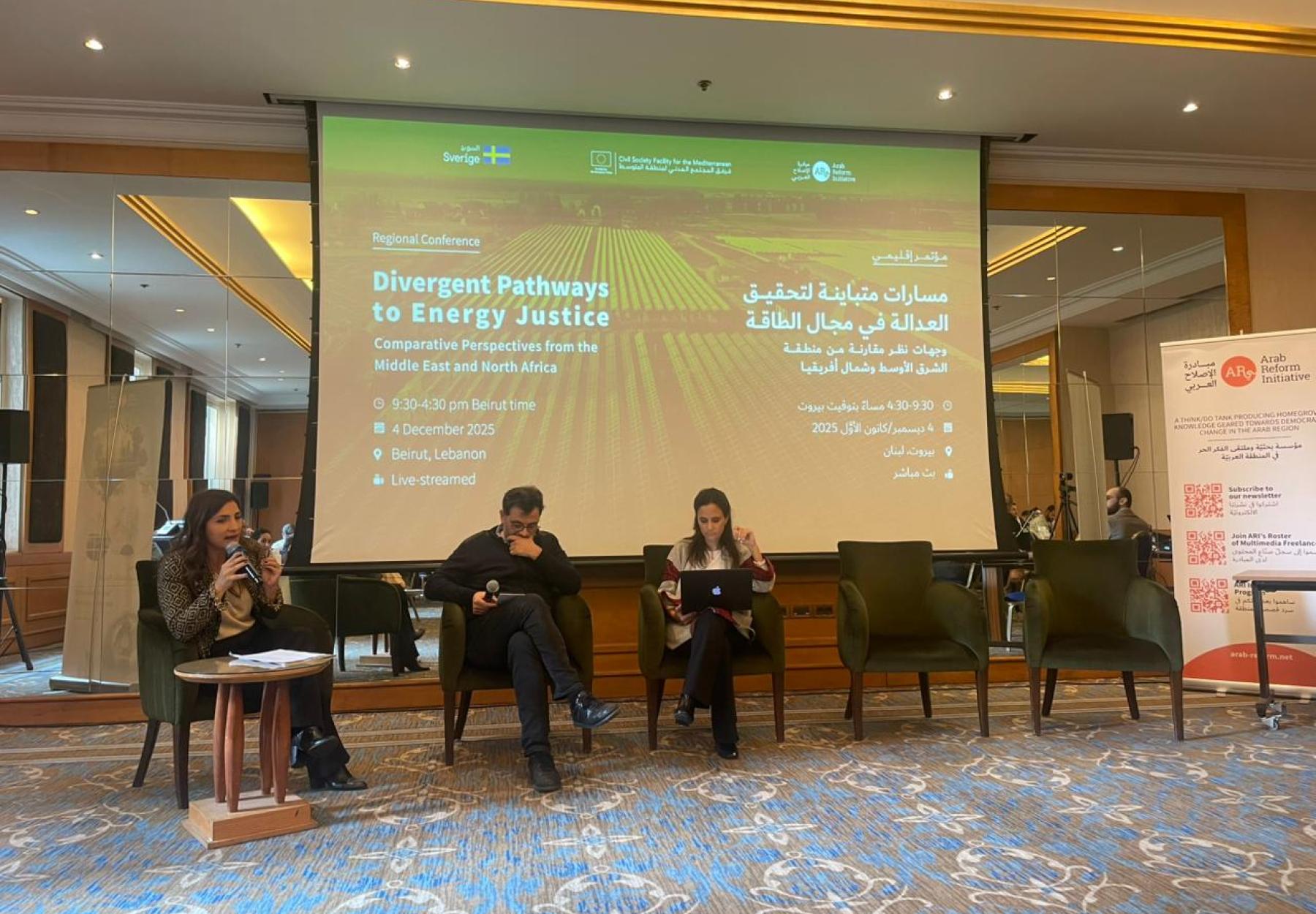
APN General Manager Mariam Al Jaajaa spoke during a workshop organised by the Arab Reform Initiative, titled “From Research to Advocacy: Towards a Regional Agenda on Water Justice and Food Sovereignty in the Middle East and North Africa”, held as part of the conference “Divergent Pathways to Energy Justice: Comparative Perspectives from MENA”. She gave a comprehensive intervention highlighting the organisation’s experience in advocacy and campaigning in Palestine, Jordan, and Lebanon, and its role in influencing public policies around land, food, and related investment projects.
Al Jaajaa emphasised that strategies and allies vary depending on the nature of the campaign, particularly when distinguishing between “purely capitalist” issues and those of a “geopolitical capitalist” nature linked to the extensions of settler colonialism. She explained that most of APN’s campaigns arose in response to imposed projects driven by external pressure or investment, which often conflict with the public interest and food sovereignty.
She presented examples of such campaigns, including efforts to confront projects aimed at the privatisation of public lands.
Al Jaajaa also addressed APN’s early work on genetically modified (GM) materials, starting with awareness workshops in 2005 and culminating in confronting U.S. pressure in 2018 to allow the entry of GM materials.
The railway project in the Jordan Valley occupied a significant portion of her presentation. She explained that the project aims to expropriate approximately 3,500 dunums of fertile agricultural land to transport potash, in an area considered Jordan’s food basket. Critically, these lands make up the already limited area of classified agricultural land in Jordan, exceeding no more than 4% of the country’s total area. She pointed out that the environmental impact assessment was marred by serious legal violations, most notably the absence of consultation with the local community and several relevant ministries, as well as contradictions between the announced railway route and the lands actually expropriated.
Al Jaajaa stressed that the claim that 96% of the land slated for expropriation consists of “public land” erases historical context. Specifically, these lands were part of collective ownership systems that were dismantled in the 1960s and 1970s, after which communities were granted rights of use. She explained that APN worked to issue a statement signed by civil society and agricultural organisations, activate parliamentary accountability tools, and form a farmers’ committee, despite a media blackout resulting from conflicts of interest.
She also raised fundamental questions about the concept of the “public interest”, who defines it, and who monitors adherence to it.
To conclude her intervention, Al Jaajaa emphasised that individual compensation is insufficient to address issues that affect collective rights and threaten the only fertile lands in Jordan. She further underscored the importance of protecting traditional collective land tenure systems as well as the need to build Arab integration based on responsible investment.