APN | Rome
20 - 24 October 2025
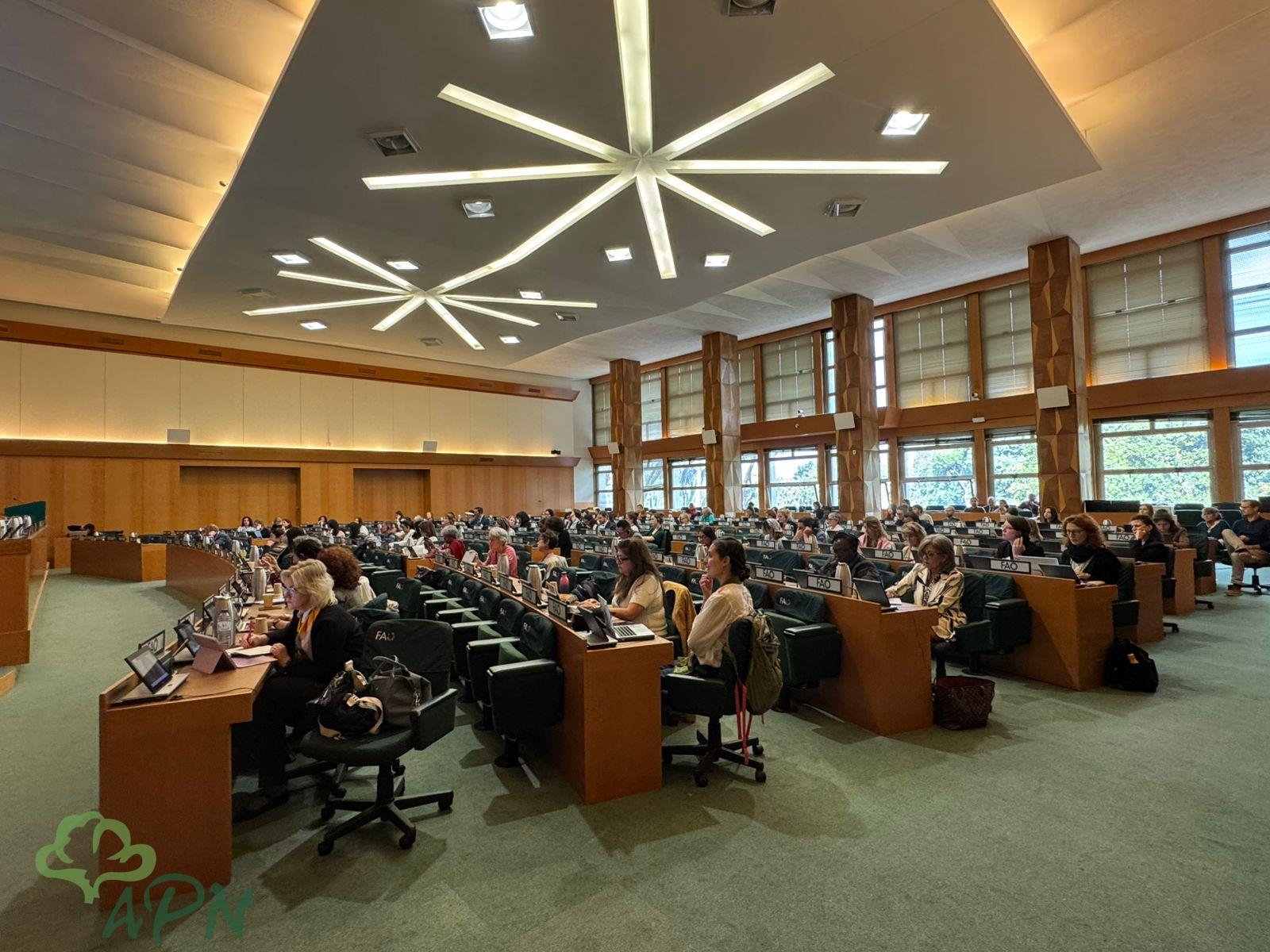
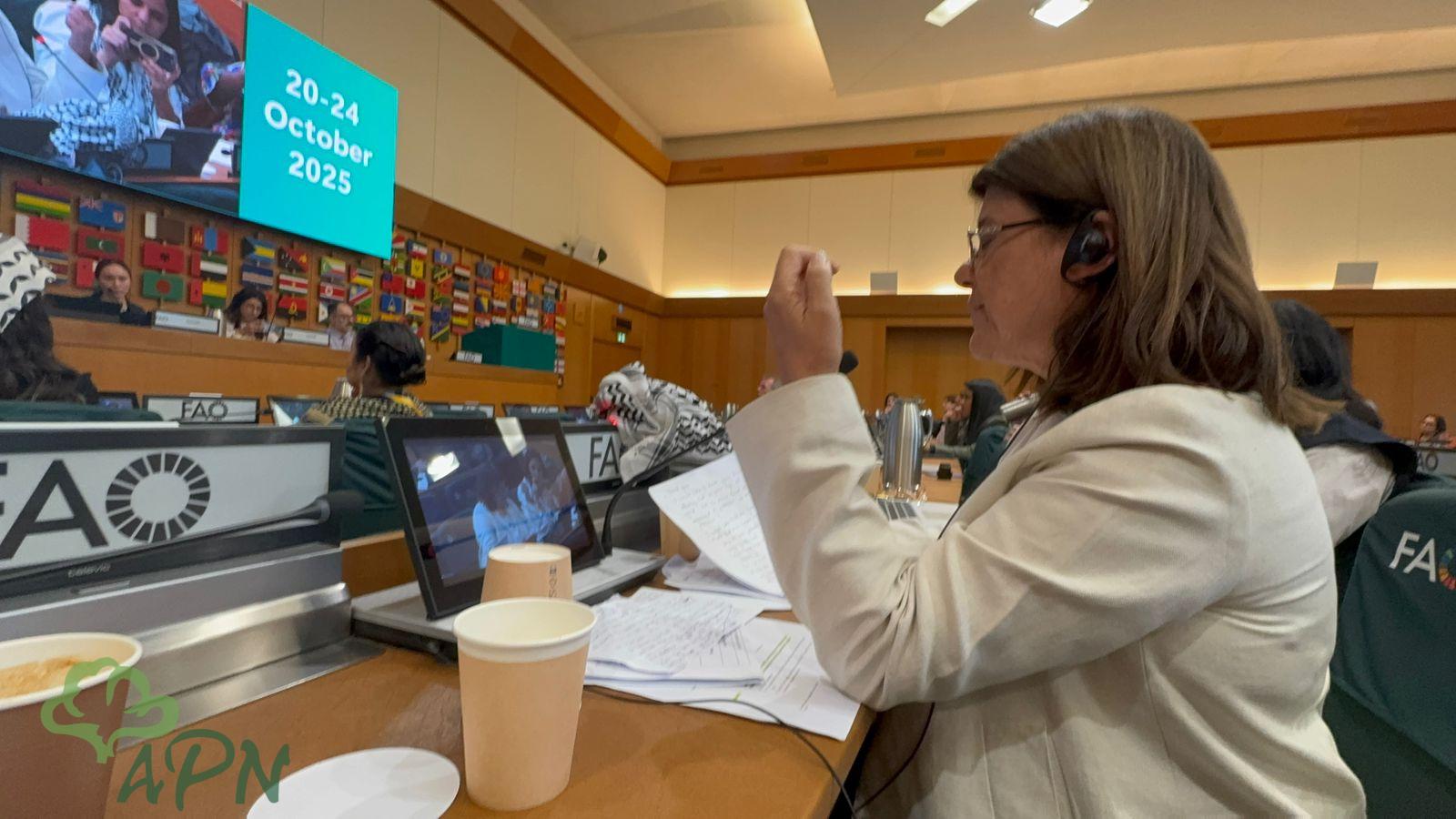
A delegation from APN participated in the 53rd session of the United Nations Committee on World Food Security (CFS), held in Rome, Italy, from 20 to 24 October 2025. The session brought together representatives from governments, international organisations, and civil society.
1.1 Opening Session: Ceasefire or a Restructured Genocide?
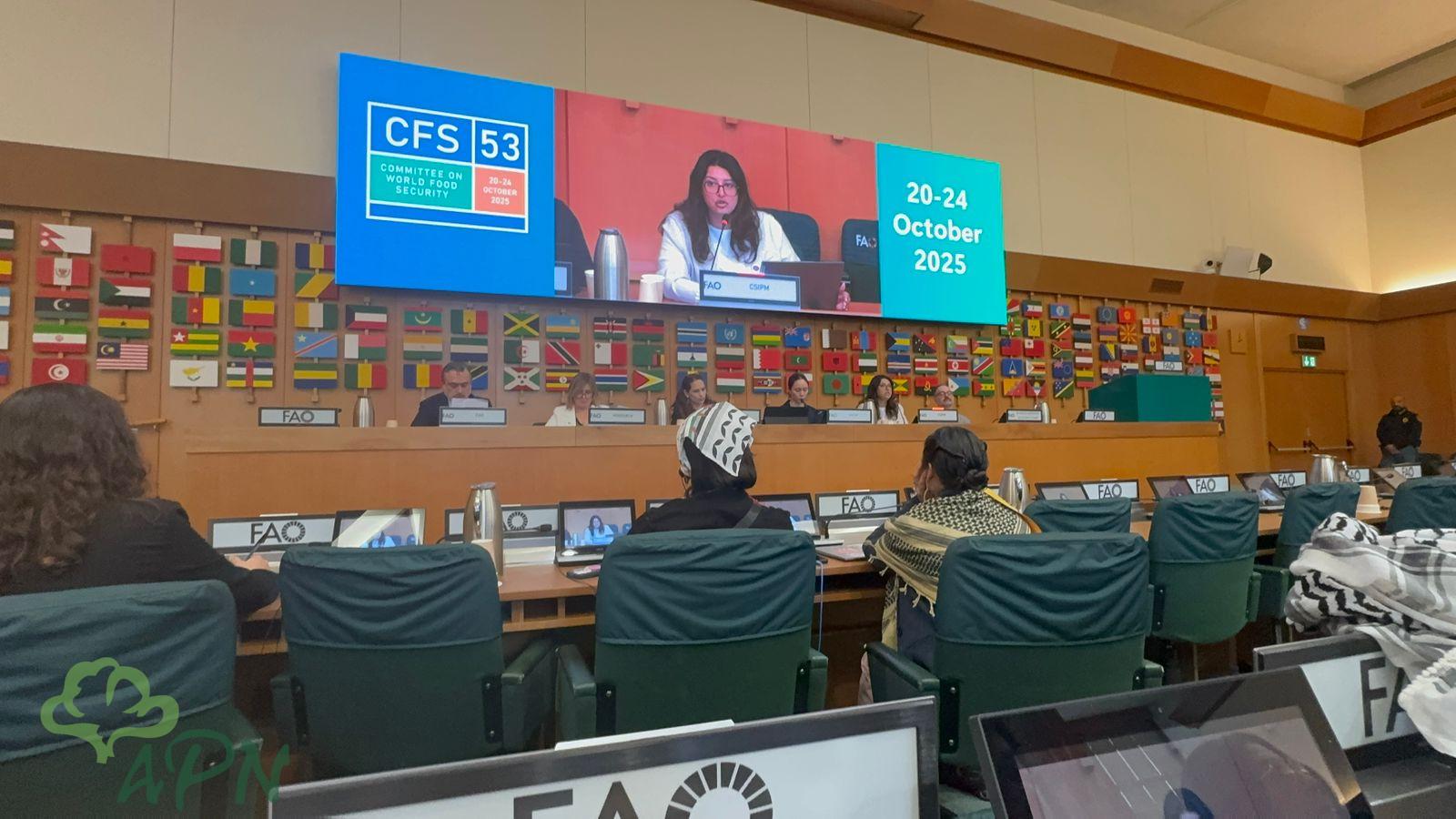
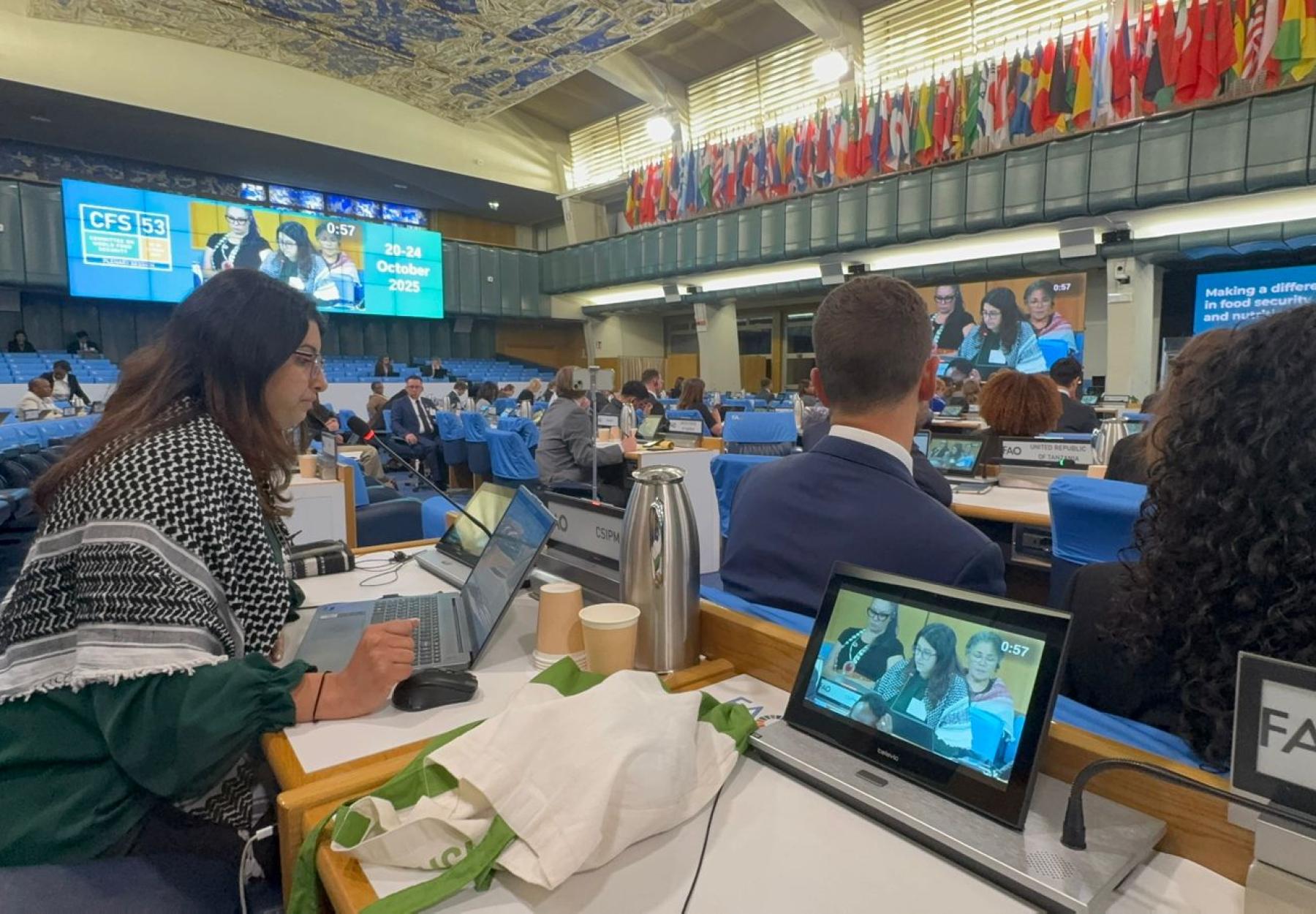
APN Advocacy and Research Officer Lisa Shahin delivered the opening statement on behalf of the Civil Society and Indigenous Peoples’ Mechanism (CSIPM). She drew attention to ongoing Israeli crimes in Gaza despite the so-called “ceasefire”.
Shahin highlighted that the occupation had carried out dozens of violations and unabated airstrikes in Gaza, killing 97 Palestinians in just ten days. Meanwhile, the Rafah crossing remains closed, and despite an agreement to allow 600 aid trucks daily, only about half have been allowed through.
She added that Gazans are prevented from accessing most of their farmland, while essential agricultural inputs remain blocked, obstructing efforts to restore local food systems. She further pointed to the intensification of land annexation in the West Bank, where 25,000 dunums were seized in 2024 — the highest figure since the Oslo Accords — while over 28,000 settlement plans and tenders were approved.
Shahin stressed that the weaponisation of food extends beyond Palestine, with similar tactics deployed against the communities of Lebanon, Yemen, Sudan, and the Congo. Accordingly, she called for robust international accountability mechanisms to hold those who exploit or destroy natural resources and local food systems responsible.
1.2 Walkout During Israeli Delegate’s Statement
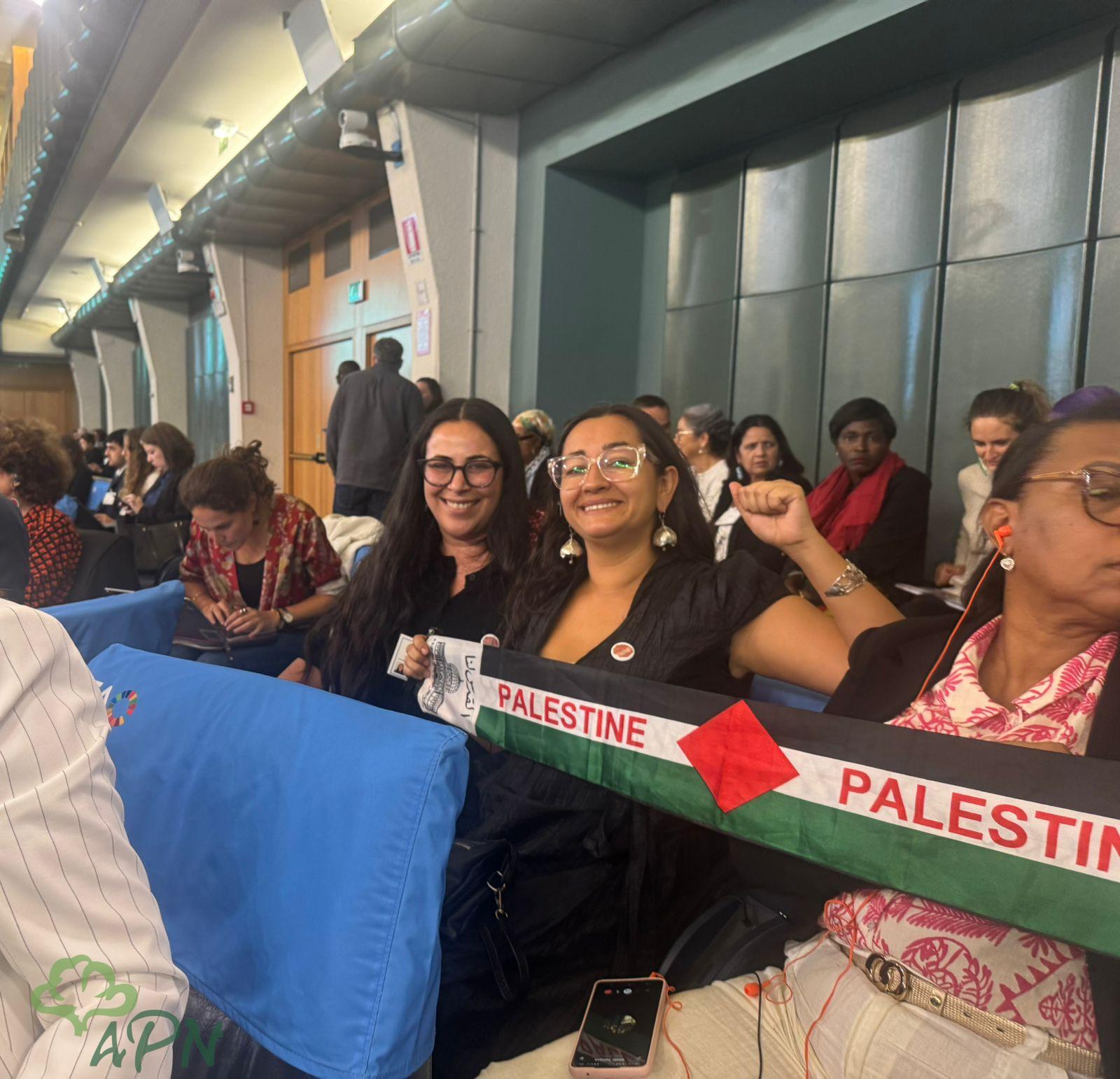
Our delegation made a symbolic stand during the opening session by leaving the room as the Israeli representative addressed the assembly. This act expressed broad solidarity with Palestinians and a rejection of normalising the occupation within UN institutions.
2.1 The Right to Food in Armed Conflict, Occupation, and Protracted Crises – 21 October 2025
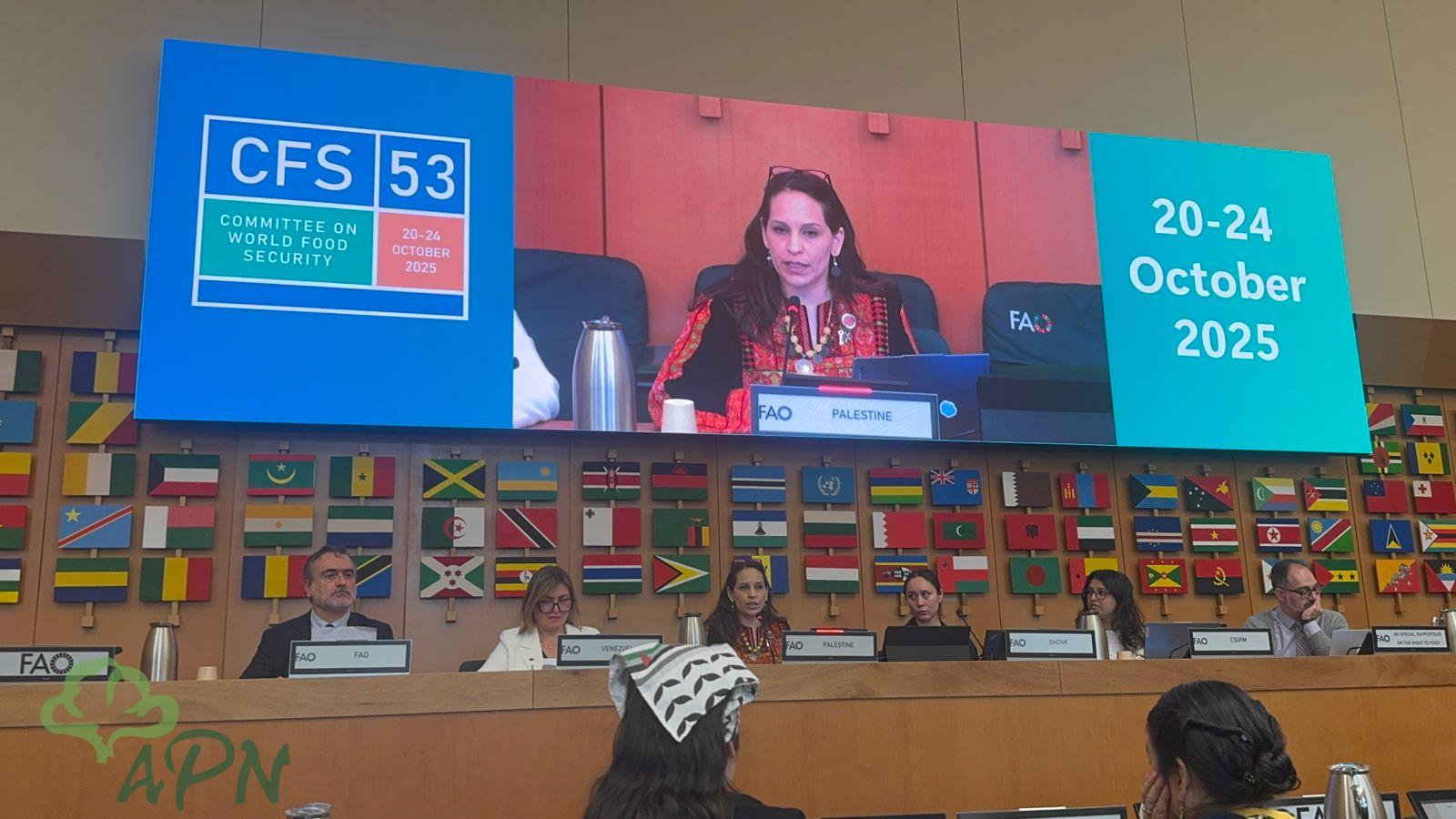
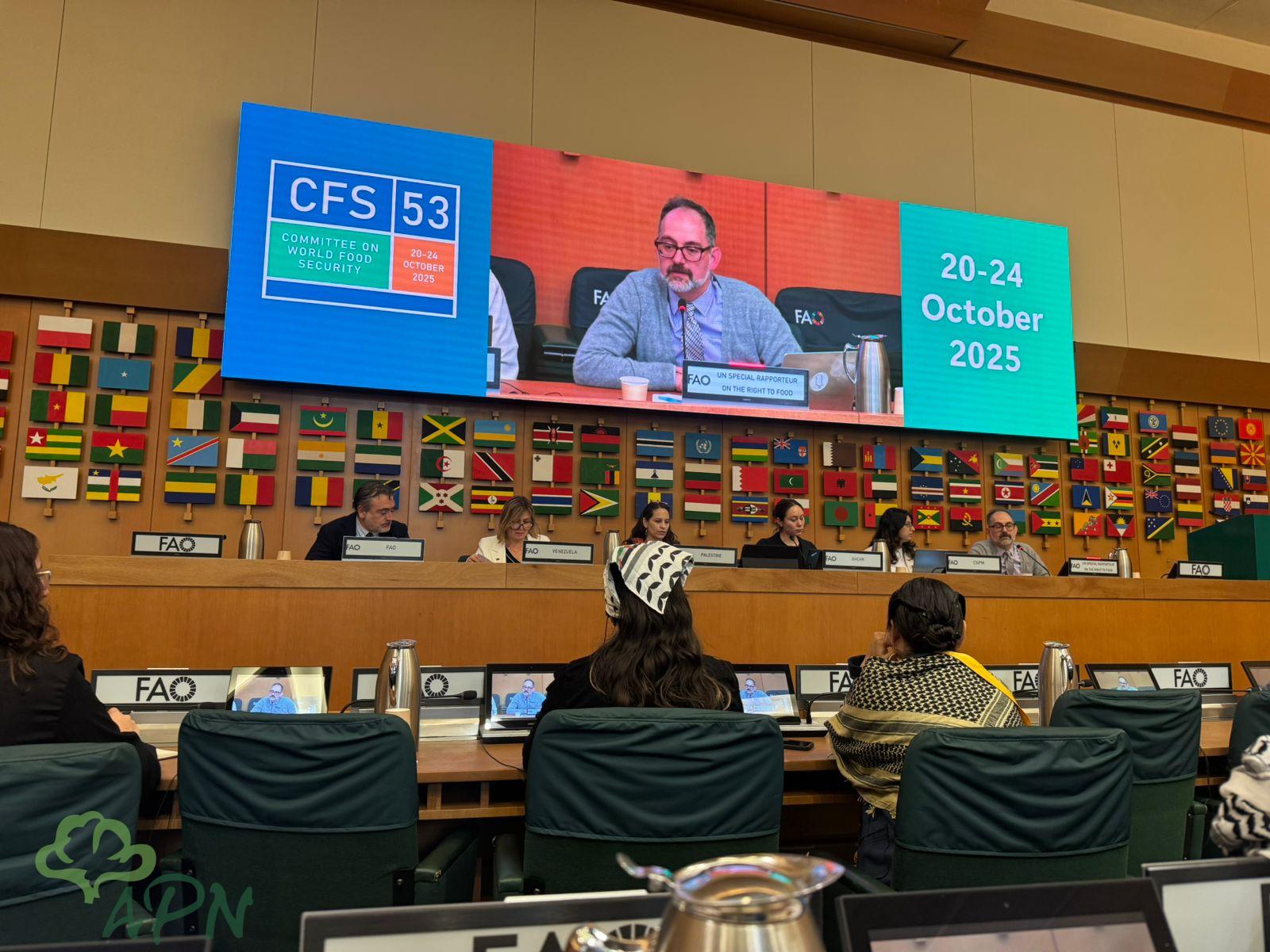
Our delegation organised and spoke in a session on applying the the CFS Framework for Action for Food Security and Nutrition in Protracted Crises (CFS-FFA), alongside ambassadors from Palestine and Venezuela, the World Food Programme (WFP), the Food and Agriculture Organization (FAO), and the UN Special Rapporteur on the Right to Food.
In our statement, we highlighted the absence of effective accountability mechanisms to protect the right to food in conflict situations, noting that political will is lacking not only among occupying powers but also within the broader international system. We critiqued the narrow focus of certain international agencies who prioritise short-term aid over sustained development and local agricultural support, thus subverting efforts to achieve food sovereignty and avert famine under blockade.
We called for humanitarian responses to be explicitly linked to sovereign development, human rights, and a just and lasting peace, as well as for bridging the gap between high-level dialogue in Rome and the realities on the ground, particularly in the Arab region.
APN Chairperson Razan Zuayter addressed the calculated brutality of the occupation’s tactics, stating that for the past two years, not a single seed has been allowed into Gaza; all incoming goods are scanned with lasers, and seeds are removed. She noted that 98% of Gaza’s agricultural land has been damaged, destroyed or remains inaccessible, describing the situation not only as a genocide, man-made famine, and ecocide, but also as a “future-cide”. She added that the remaining 2% of arable land could supply millions of kilograms of vegetables to Gaza if cultivated.
While frameworks like the CFS-FFA offer guidance to address the root causes of food insecurity in such contexts and have been endorsed by all UN member states, we emphasised that their implementation still falls on the shoulders of those living under occupation and conflict. We highlighted our work in Gaza and Lebanon as a practical example of the Framework for Action in practice.
3.1 Global Thematic Event on Conflicts, Food Security, and Nutrition – 23 October 2025
In a stark intervention, APN General Manager Mariam Al Jaajaa spoke to how every principle of the Framework for Action has been violated before, during, and after the genocide in Gaza. She exposed how food aid is weaponised by the occupying power, with seeds, infant formula, and other necessities, blocked.
Al Jaajaa denounced the occupation’s ongoing attacks on Gaza, dropping over 150 tons of bombs daily – many of which being supplied by governments in the session and subsequently marketed as “battle-proven”.
She exposed corporate complicity in the ongoing genocide, citing UN Special Rapporteur Francesca Albanese’s report, and condemned both the UN and donors for blocking critical reforms due to conditional funding.
To conclude, she demanded a shift from merely documenting destruction to actively supporting local procurement and production in Gaza, stressing that communities in Palestine, Sudan, the Congo, Yemen, Lebanon, and Haiti continue to bear the cost of systemic failures in global justice.
3.2 Negotiations on the CFS Summary Report
Our delegation actively participated in negotiating the summary report, working to secure both language that reflects the reality of genocide in Gaza and provisions that establish accountability for those who weaponise food.
Despite attempts by the Israeli representative to remove references to Gaza, our delegation successfully ensured its inclusion in the final text – a culmination of three rounds of negotiation during September and October 2025.
4.1 Global CSIPM Forum – 19 October 2025
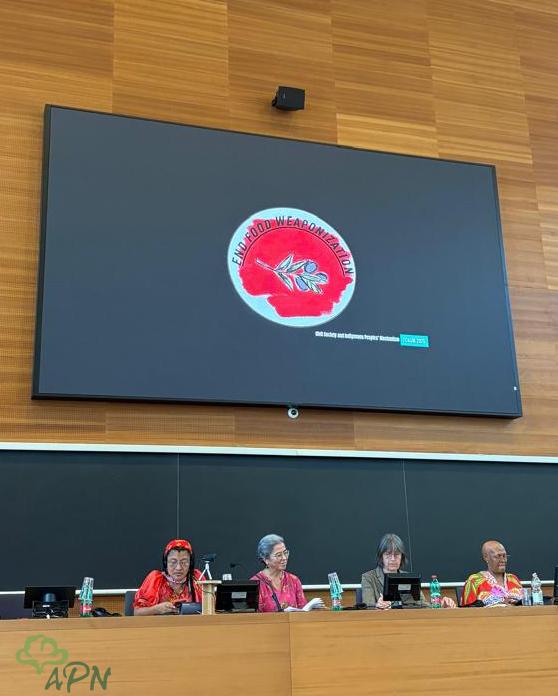
During the Global CSIPM Forum, ahead of the official session, APN hosted a session on “Use of hunger as a weapon of war” placing Palestine, and Gaza in particular, at the forefront. Participants discussed ways to advance this issue on the CFS agenda and coordinate efforts to present unified positions to member states and international agencies.
5.1 Coordination Committee Meeting for the Civil Society and Indigenous Peoples’ Mechanism – 15–17 October 2025
Our delegation also participated in the Coordination Committee meeting, representing the West Asia seat on behalf of the Arab Network for Food Sovereignty. The meeting focused on regional priorities and preparing joint contributions for the 53rd session of the Committee on World Food Security.